



What's Happening?
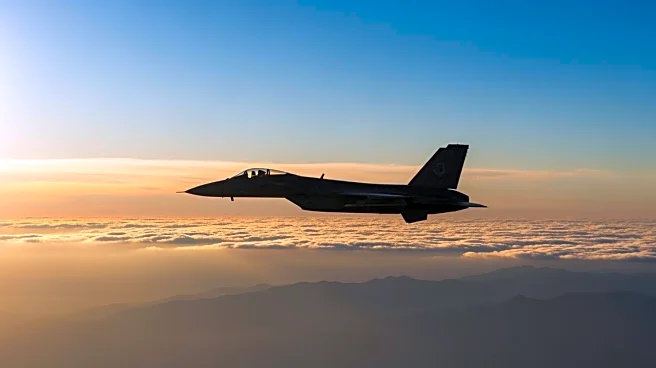
The United States has reinforced its air power at Kadena Air Base in Japan, a strategic location near China, by deploying additional fighter jets. This move is part of a force transition that began in fall 2022, aimed at maintaining a credible military
presence in the Western Pacific. The base, which is the closest U.S. air base to Taiwan, is phasing out its aging F-15C/D jets and is set to receive the first F-15EX jets. In the interim, the base is hosting a rotational presence of aircraft from other bases to ensure continuous U.S. air power. This deployment comes amid increasing military activities by China near Japan, a U.S. ally, and follows Tokyo's statements about potential military intervention if China acts against Taiwan.
Why It's Important?
The reinforcement of U.S. air power at Kadena Air Base is significant due to the strategic importance of the location in deterring Chinese aggression in the region. The base is part of the First Island Chain, a U.S. containment strategy aimed at defending against Chinese military actions, particularly in the Taiwan Strait and the East and South China Seas. The continuous presence of U.S. fighter jets serves as a deterrent to potential Chinese military moves and underscores the U.S. commitment to its allies in the region, particularly Japan. This development could impact regional stability and influence U.S.-China relations, as well as the security dynamics in the Indo-Pacific.
What's Next?
The U.S. Air Force plans to continue its rotational deployment of fighter jets at Kadena until the permanent stationing of F-15EX jets in spring 2026. This ongoing military presence is likely to provoke reactions from China, which views U.S. military activities near Taiwan as a threat to its national security. The situation may lead to further diplomatic tensions between the U.S. and China, and could influence future military and security policies in the region.