

What's Happening?
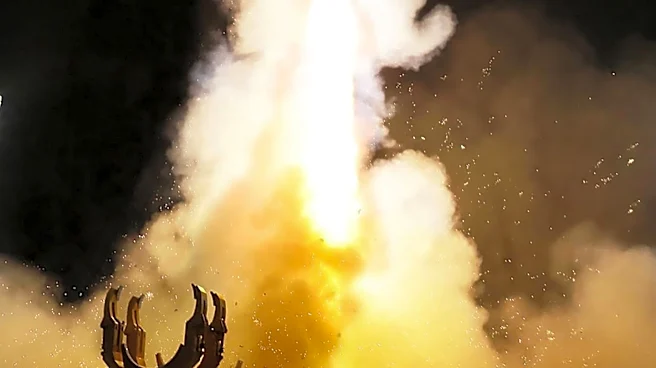
Lt. Col. William Swenson, then a captain in the 10th Mountain Division, was awarded the Medal of Honor for his actions during the Battle of Ganjgal in Afghanistan. During the battle, Swenson repeatedly requested artillery and air support, which was denied
by his superiors. An investigation conducted after the battle confirmed Swenson's criticism that the denial of support was a political decision, leading to reprimands for two officers. Following this, Swenson's recommendation for the Medal of Honor disappeared from Army records for over two years. The case was only reopened and pursued after a U.S. Marine general intervened, resulting in Swenson receiving the Medal of Honor in 2013, four years after the battle occurred. Swenson commented on the incident by stating, “Behind every single institutional failure, there’s a name,” highlighting that bureaucratic failures are often the result of specific individual decisions.
Why It's Important?
This event underscores critical issues within military command structures and the process of recognizing valor. The initial denial of crucial support, later deemed a political decision, raises concerns about the prioritization of political considerations over the safety and operational needs of soldiers in combat. Furthermore, the disappearance of Swenson's Medal of Honor recommendation from Army records for an extended period highlights potential systemic flaws or deliberate obstruction within military bureaucracy. The intervention of a U.S. Marine general to rectify this injustice demonstrates the importance of oversight and accountability in ensuring that deserving service members receive appropriate recognition. This case serves as a powerful reminder that institutional failures are not abstract but stem from individual actions and decisions, impacting morale, trust, and the integrity of military honors.
What's Next?
While Lt. Col. Swenson has received his due recognition, the broader implications of this incident may continue to influence discussions on military accountability and the process of awarding commendations. The emphasis on individual responsibility for institutional failures, as articulated by Swenson, could prompt further scrutiny of decision-making processes within the armed forces. This case may serve as a precedent or a cautionary tale in future investigations into military conduct and bureaucratic inefficiencies. It could also encourage a more transparent and robust system for handling commendation recommendations, ensuring that such delays and disappearances do not recur. The incident reinforces the need for continuous evaluation of military protocols to prevent political considerations from compromising operational effectiveness and the recognition of heroism.
Beyond the Headlines
The narrative surrounding Lt. Col. Swenson's Medal of Honor sheds light on the often-unseen human element behind bureaucratic processes. His statement, “Behind every single institutional failure, there’s a name,” transcends military contexts and applies to any large organization, whether governmental or private. It challenges the common tendency to attribute failures to an impersonal 'system' or 'bureaucracy,' instead pointing to the specific individuals whose decisions or lack thereof lead to adverse outcomes. This perspective encourages a deeper examination of leadership, ethics, and accountability at all levels. The delay in recognizing Swenson's heroism also highlights the psychological toll and potential disillusionment that can arise when individuals feel their sacrifices are overlooked or deliberately suppressed due to internal politics, emphasizing the critical importance of integrity in institutional recognition.