


What's Happening?
The University of Virginia (UVA) is hosting a photography exhibit titled 'The Way We See It,' featuring images taken by children displaced by the February 2023 earthquake in southeastern Türkiye and northern Syria. Lucy Bassett, a professor of practice
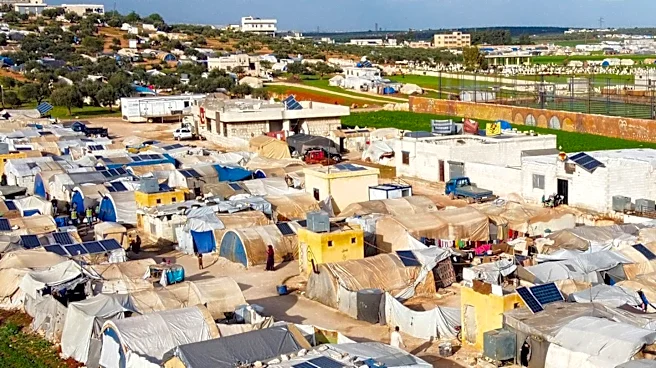
in public policy at UVA's Batten School of Leadership and Public Policy and an expert in children in humanitarian contexts, initiated the project. Concerned about the 2.5 million people, many of them children, living in crowded container camps after the 7.8 magnitude earthquake, Bassett collaborated with Save the Children. She visited two camps in Hatay, Türkiye, one of the hardest-hit areas, approximately a year after the disaster. There, 23 children aged 5-10 were given 35-millimeter disposable cameras and instructed to photograph their daily lives over two weeks. The resulting hundreds of vibrant and colorful images offer unique insights into their experiences in the camps.
Why It's Important?
This exhibit is important as it provides a rare and unfiltered glimpse into the lives of children affected by a major humanitarian crisis. By empowering children to document their own realities, the project offers a powerful counter-narrative to traditional media portrayals, which often focus on the devastation rather than the resilience and daily experiences of those living through it. For the U.S. audience, it fosters a deeper understanding of the long-term human impact of international disasters and the challenges faced by displaced populations. It also highlights the role of academic institutions like UVA in contributing to humanitarian efforts through research and innovative projects that give voice to vulnerable communities. The exhibit can influence public perception and potentially encourage greater support for humanitarian aid and child development initiatives in crisis zones.
What's Next?
The 'The Way We See It' exhibit at UVA's Shannon Library will continue to be accessible to the public, offering ongoing educational opportunities. Future steps could involve touring the exhibit to other institutions or communities, both within the U.S. and internationally, to broaden its reach and impact. Discussions may arise regarding the potential for similar participatory photography projects in other humanitarian contexts, further empowering children to share their stories. Academically, the project's methodology and findings could contribute to studies on early child development in crisis settings and the effectiveness of arts-based interventions in humanitarian aid. The images may also be used in advocacy campaigns by organizations like Save the Children to raise awareness and secure funding for displaced children.
Beyond the Headlines
Beyond the immediate visual impact, this exhibit delves into profound ethical and psychological dimensions. It underscores the importance of child agency and self-representation in narratives of trauma and displacement, challenging the passive victim narrative often imposed on children in crisis. The act of giving children cameras can be seen as a therapeutic intervention, providing them with a means of expression and control in environments where they often have little. Legally and ethically, such projects raise questions about consent, privacy, and the responsible dissemination of images taken by vulnerable populations, even when the intent is benevolent. Culturally, the exhibit bridges divides by allowing viewers to connect with the universal experiences of childhood, resilience, and adaptation, even amidst profound adversity, fostering empathy and a more nuanced global perspective.