





What's Happening?
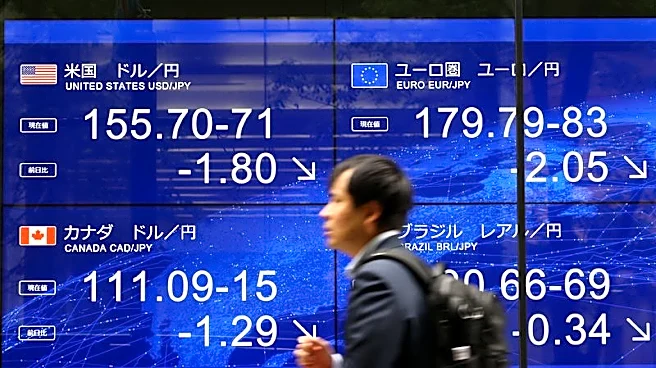
The Japanese Yen is experiencing significant depreciation, despite multiple intervention efforts by Japanese and US authorities. The interventions, aimed at stabilizing the Yen, have not succeeded in reversing its downward trend. The depreciation is attributed
to Japan's fiscal policies and debt issues, with the Bank of Japan's yield suppression efforts being a central factor. The Yen's decline is seen as a symptom of Japan's broader economic challenges, including its high debt levels and efforts to reflate the economy. Despite Japan's substantial foreign exchange reserves, the market's reaction to fiscal policy changes indicates deep-seated concerns about the country's economic stability.
Why It's Important?
The continued depreciation of the Yen has significant implications for global financial markets and economic relations. For the US, a weaker Yen can affect trade balances and economic competitiveness. It also raises concerns about the effectiveness of monetary interventions in stabilizing currencies. For Japan, the depreciation exacerbates the challenges of managing its high debt levels and maintaining economic growth. The situation highlights the limitations of interventionist policies in addressing structural economic issues, emphasizing the need for comprehensive fiscal reforms. The Yen's weakness could also impact investor confidence and lead to increased volatility in currency markets.
What's Next?
Japan may need to consider more substantial fiscal reforms to address the underlying causes of the Yen's depreciation. This could involve measures to reduce debt levels and enhance economic growth. The international community, particularly the US, may continue to monitor the situation closely, given its potential impact on global economic stability. Further interventions may be considered, but their effectiveness remains uncertain. The situation could also prompt discussions on the need for coordinated international efforts to address currency volatility and economic imbalances.