






What's Happening?
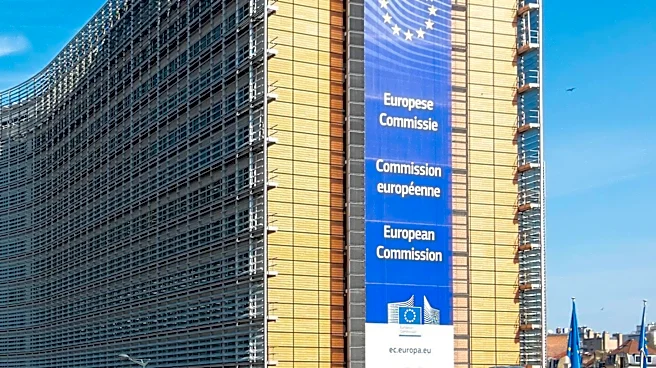
The European Commission has released its annual update on countries aspiring to join the European Union, providing indicative roadmaps for those in advanced stages of negotiation. The update identifies Montenegro, Albania, Ukraine, and Moldova as the frontrunners
in the accession process, noting that their ongoing reforms are yielding positive results. The Commission emphasizes that every previous enlargement has strengthened the EU, citing significant improvements in living standards, increased life expectancy, and the creation of millions of new jobs across Europe since 2004 in newer Member States. This communication underscores the belief that further enlargement will continue to deliver growth, opportunity, and prosperity for the entire European continent. The update serves as a progress report and a strategic guide for these nations as they continue to align their legal and economic frameworks with EU standards, moving closer to potential membership. The detailed communication is available on EUR-Lex, with additional information provided through official EU channels.
Why It's Important?
This update on EU enlargement is significant as it signals the European Union's continued commitment to its expansion policy, even amidst various internal and external challenges. For the aspiring member states—Montenegro, Albania, Ukraine, and Moldova—it provides crucial validation of their reform efforts and offers a clearer path forward. Successful accession for these countries would extend the EU's zone of stability, democracy, and economic prosperity, particularly in regions that have historically faced geopolitical complexities. The integration of new members can also bring fresh perspectives, diverse economies, and increased geopolitical influence to the EU. From an economic standpoint, enlargement often stimulates trade, investment, and economic convergence, benefiting both existing and new members. However, it also presents challenges, such as the need for institutional adjustments within the EU and ensuring that new members fully adhere to democratic principles and the rule of law. The Commission's positive assessment suggests a strategic imperative to integrate these nations, reinforcing the EU's role as a major global actor.
What's Next?
Following this update, the aspiring member states—Montenegro, Albania, Ukraine, and Moldova—are expected to continue their reform processes, focusing on aligning their legislation and institutions with EU standards as outlined in their respective roadmaps. The European Commission will likely maintain close oversight, providing guidance and support for these reforms. The next steps will involve further negotiations, with each country needing to meet specific benchmarks across various chapters of EU law. The pace of accession will depend on the political will and capacity of each candidate country to implement necessary changes, particularly in areas such as rule of law, judicial reform, and economic governance. The EU itself will need to prepare for potential new members, which may involve internal discussions on institutional reforms and budget allocations. Future updates from the European Commission will continue to monitor progress and provide further indicative timelines, with the ultimate decision on membership requiring unanimous approval from all existing EU member states.
Beyond the Headlines
Beyond the immediate political and economic implications, the EU's enlargement process carries profound geopolitical significance. Integrating countries like Ukraine and Moldova, which share borders with Russia, can be seen as a strategic move to bolster stability and democratic values in Eastern Europe, potentially counteracting external influences. For the Western Balkan nations of Montenegro and Albania, accession would further consolidate peace and reconciliation in a region historically marked by conflict. However, the process also raises deeper questions about the EU's capacity for integration, the potential for internal divisions over enlargement, and the challenges of absorbing diverse economies and political systems. The emphasis on reforms, particularly in governance and rule of law, highlights the EU's commitment to its core values, but also underscores the ongoing struggle against corruption and democratic backsliding in some candidate countries. Ultimately, successful enlargement is not just about expanding borders but about strengthening the EU's foundational principles and its role as a normative power on the global stage.