



What's Happening?
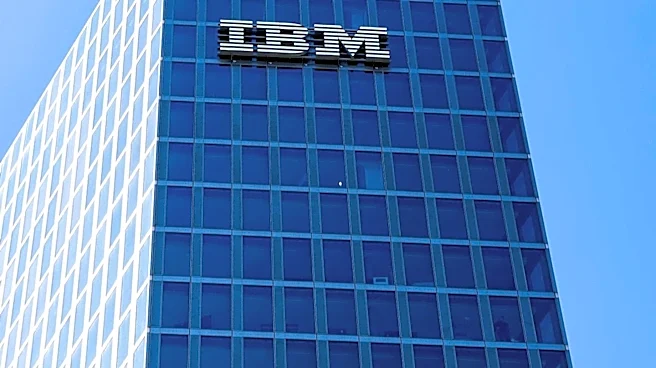
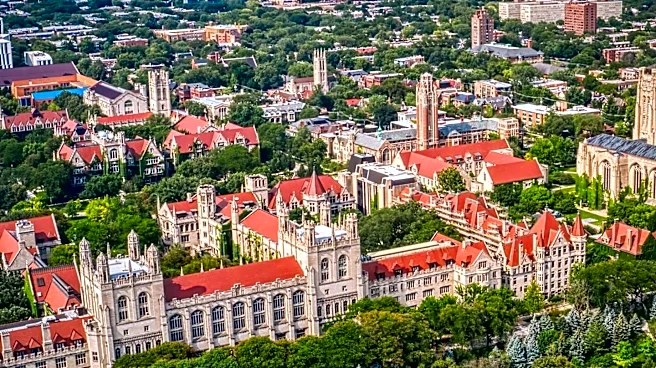
IBM has launched its first quantum computer in Illinois, the IBM Quantum System Two, powered by the Quantum Nighthawk processor. This advanced system is now operational at Hyde Park Labs in Chicago, hosted by the University of Chicago. The deployment
marks a significant expansion of IBM's quantum computing infrastructure and aims to provide researchers, businesses, and academic institutions across Illinois with access to cutting-edge quantum capabilities. The system will eventually be relocated to the Illinois Quantum and Microelectronics Park (IQMP), where it will serve as the anchor for the National Quantum Algorithm Center. This initiative is designed to accelerate the development of scalable quantum algorithms and explore diverse applications across various industries. IBM is collaborating with several organizations, including Deloitte, AbbVie, EPRI, Fermilab, Northwestern University, and the University of Illinois Urbana-Champaign, on research spanning drug discovery, molecular simulation, power-grid optimization, and high-energy physics. Additionally, IBM plans to establish the FutureNow Chicago center at IQMP, in partnership with City Colleges of Chicago, to create 750 jobs in emerging technology fields such as AI, cybersecurity, data science, and quantum computing.
Why It's Important?
The introduction of IBM's quantum computer in Illinois is a pivotal development for the state's technological and economic landscape. It positions Illinois as a leading hub for quantum innovation, attracting further investment and talent in the high-tech sector. The collaboration between IBM, academic institutions, and industry partners is expected to foster breakthroughs in critical areas like drug discovery and energy efficiency, which have broad societal and economic implications. For businesses, access to this advanced computing power could lead to competitive advantages through optimized processes and novel solutions. The creation of 750 jobs through the FutureNow Chicago center signifies a substantial boost to workforce development, preparing the local population for the demands of future industries. This initiative also strengthens the U.S.'s position in the global race for quantum supremacy, ensuring that domestic research and development remain at the forefront of this transformative technology. The investment underscores the growing importance of quantum computing in addressing complex challenges that traditional supercomputers struggle with, potentially unlocking new frontiers in scientific research and industrial applications.
What's Next?
The IBM Quantum System Two will initially serve researchers and institutions in Illinois, with plans for its eventual relocation to the Illinois Quantum and Microelectronics Park (IQMP). Once at IQMP, it will become the central component of the National Quantum Algorithm Center, further solidifying Illinois' role as a quantum innovation hub. IBM and its partners will continue to advance research in various fields, including drug discovery, molecular simulation, and power-grid optimization, leveraging the new system's capabilities. The establishment of the FutureNow Chicago center at IQMP is expected to proceed, focusing on workforce development and creating new job opportunities in AI, cybersecurity, data science, and quantum computing. Competitors like Microsoft and Alphabet (Google) are also actively advancing their quantum computing initiatives, focusing on qubit technology, processor performance, and error minimization. This competitive landscape suggests a continued rapid evolution in quantum computing, with ongoing efforts to develop more stable, efficient, and practical quantum solutions. Future developments will likely include further advancements in quantum hardware, the development of more sophisticated quantum algorithms, and the exploration of new real-world applications.
Beyond the Headlines
The deployment of IBM's quantum computer in Illinois extends beyond immediate technological advancements, signaling a broader shift in the landscape of high-performance computing and national strategic priorities. This move highlights the increasing recognition of quantum computing as a critical technology for national security, economic competitiveness, and scientific leadership. The emphasis on workforce development through initiatives like FutureNow Chicago indicates a proactive approach to building a skilled labor force capable of supporting the quantum era, addressing potential talent gaps in emerging technologies. Ethically, the power of quantum computing raises questions about data security, privacy, and the potential for misuse, necessitating ongoing discussions about responsible development and governance. Legally, the intellectual property generated from quantum research will be highly valuable, leading to potential disputes and the need for robust legal frameworks. Culturally, the integration of quantum computing into various industries could fundamentally alter how problems are solved, fostering a new era of innovation and potentially disrupting existing business models. This development also underscores the growing trend of public-private partnerships in driving technological progress, with governments, academic institutions, and corporations collaborating to achieve ambitious scientific and economic goals.