







What's Happening?
Representatives William Timmons from South Carolina and Sam Liccardo from California have introduced the bipartisan 'Ounce of Prevention Act' (H.R.9557). This legislation aims to allow states, cities, and local governments to utilize Community Development
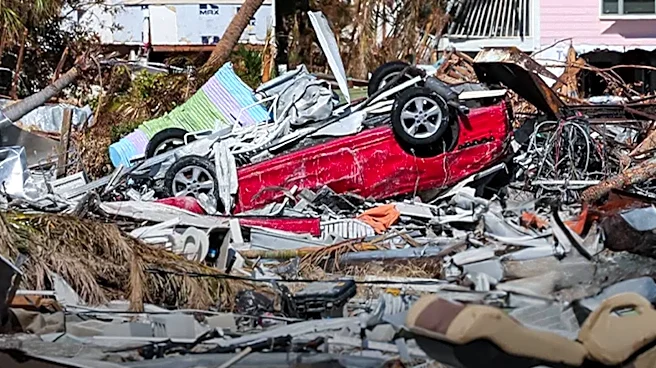
Block Grant (CDBG) funds for pre-disaster risk mitigation. The bill seeks to provide communities with greater flexibility to strengthen infrastructure and prepare for hazards such as storms, floods, and wildfires before they cause significant damage. Currently, CDBG funds are not eligible for pre-disaster mitigation, with Congress typically providing supplemental funding only after disasters have occurred. The bill has garnered support from Representatives Maria Elvira Salazar and Jill Tokuda as cosponsors. The National Low Income Housing Coalition (NLIHC) and its Disaster Housing Recovery Coalition (DHRC) have endorsed the bill, highlighting its potential to help low-income and marginalized communities implement resilience measures in anticipation of more frequent and severe disasters.
Why It's Important?
The introduction of the 'Ounce of Prevention Act' is significant as it addresses the growing need for proactive disaster management strategies in the face of increasing climate-related events. By allowing the use of CDBG funds for pre-disaster mitigation, the bill could enable communities to invest in infrastructure improvements and risk reduction measures before disasters strike, potentially saving lives and reducing economic losses. This approach could particularly benefit low-income and marginalized communities, which are often the most vulnerable to the impacts of natural disasters. The bill represents a shift towards a more preventative approach in disaster management policy, which could lead to more sustainable and resilient community development.
What's Next?
If passed, the 'Ounce of Prevention Act' would mark a significant change in how federal disaster funding is allocated, potentially setting a precedent for future legislation focused on pre-disaster mitigation. The bill's progress will likely be closely monitored by stakeholders in disaster management, housing, and community development sectors. Advocacy groups such as the NLIHC and DHRC are expected to continue lobbying for the bill's passage, emphasizing its potential benefits for vulnerable communities. The legislative process will involve further discussions and potential amendments as it moves through Congress.