








What's Happening?
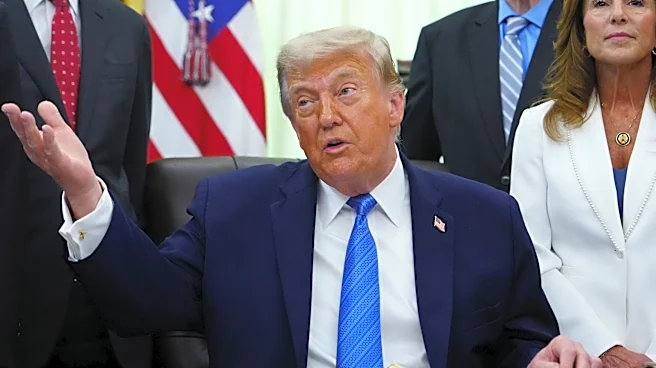
Former Republican U.S. Representative Marjorie Taylor Greene has publicly criticized President Donald Trump and his team, accusing them of making him appear foolish by not holding him accountable for his past statements on avoiding wars. During an appearance
on CNN, Greene highlighted Trump's campaign promises to avoid new military entanglements, which she claims are contradicted by recent actions in the Strait of Hormuz. The U.S. Central Command reported that Trump authorized retaliatory strikes after a U.S. Apache helicopter incident, which U.S. officials attributed to Iran. Greene's comments come amid ongoing military actions and debates over the legitimacy of these strikes, as questions remain about the circumstances leading to the helicopter incident. Greene, once a staunch Trump ally, has distanced herself from him over various issues, including the release of the Jeffrey Epstein files.
Why It's Important?
Greene's criticism underscores a significant rift within Trump's political base, particularly concerning his foreign policy decisions. Her remarks highlight the tension between Trump's campaign rhetoric of avoiding foreign wars and the current military actions that suggest otherwise. This situation could impact Trump's support among voters who prioritized his anti-war stance. Additionally, the ongoing military actions in the Strait of Hormuz have broader implications for U.S. foreign policy and its relations with Iran, potentially affecting global oil markets and international diplomatic efforts. Greene's comments may also influence public perception of Trump's administration and its handling of foreign policy, especially among conservative constituents.
What's Next?
The situation in the Strait of Hormuz remains volatile, with potential for further military engagements. The U.S. administration may face increased scrutiny from both domestic and international observers regarding its actions and justifications for military strikes. Political leaders and stakeholders may call for more transparency and accountability in decision-making processes. Additionally, Greene's criticism could prompt further debate within the Republican Party about the direction of U.S. foreign policy under Trump's leadership. The administration may need to address these concerns to maintain support from its base and manage international relations effectively.