




What's Happening?
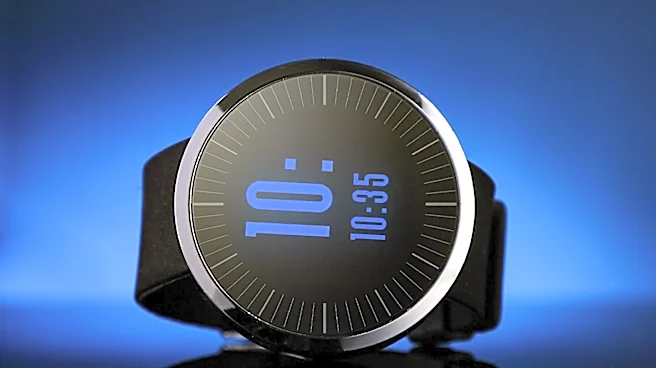
A software engineer successfully used AI, specifically Claude and other open-weight models like Kimi K3 & K2.6 and DeepSeek v4 Pro & Flash, to develop a custom watch face for a $27 PineTime smartwatch. The PineTime, known for its open-source firmware,
provided an ideal platform for this project due to its affordability, extensive documentation, and a robust simulator. The developer, inspired by a tweet about hacking ESP32 devices with Claude, aimed to create a watch face similar to a custom Casio design for an Apple Watch. The process involved using the AI to generate code, starting with an existing InfiniTime watch face, and iteratively refining the design. While the AI produced a good initial approximation, the developer provided specific feedback to achieve the desired pixel-perfect result, particularly in text sizing and positioning. The project highlighted the potential of AI in accelerating firmware development for physical devices.
Why It's Important?
This project demonstrates a significant advancement in the application of artificial intelligence for hardware development, particularly in the realm of open-source and low-cost devices. The successful use of AI to generate and refine firmware for a smartwatch indicates a future where AI tools could democratize hardware development, making it more accessible to individuals without extensive coding expertise. For the technology industry, this showcases the potential for AI to streamline prototyping and development cycles, reducing time and cost. It also underscores the growing importance of well-documented open-source projects, as AI models thrive on comprehensive data. This could lead to a surge in innovative applications for affordable hardware, fostering a new wave of creativity and development in the tech community.
What's Next?
The developer plans to make the code available on GitHub, encouraging others to use it as a starting point for their own projects. The experience gained from this project, including the lessons learned with AI, will be summarized in an AGENTS.md file to assist future developers. This initiative could inspire more individuals to experiment with AI-assisted firmware development, potentially leading to a community-driven ecosystem of AI-generated watch faces and other applications for open-source smartwatches. Future developments might involve AI models becoming more sophisticated, capable of achieving pixel-perfect designs autonomously, or even designing entire firmware from high-level descriptions. The project also hints at the potential for AI to be integrated into the development tools themselves, offering real-time feedback and code generation capabilities.
Beyond the Headlines
This endeavor highlights a deeper shift in the human-computer interaction paradigm, where AI transitions from a mere tool to a collaborative partner in creative and technical endeavors. The developer's experience of working 'with an AI' rather than simply 'using an AI' suggests a future where AI agents can take on more complex, iterative tasks, allowing human developers to focus on higher-level design and problem-solving. This collaboration also raises questions about the evolving skill sets required for future engineers, emphasizing the importance of prompt engineering and the ability to guide AI effectively. Furthermore, the project's success with a low-cost, open-source device underscores the potential for AI to empower grassroots innovation, enabling individuals to bring their ideas to life with fewer financial and technical barriers, fostering a more inclusive technological landscape.