

What's Happening?
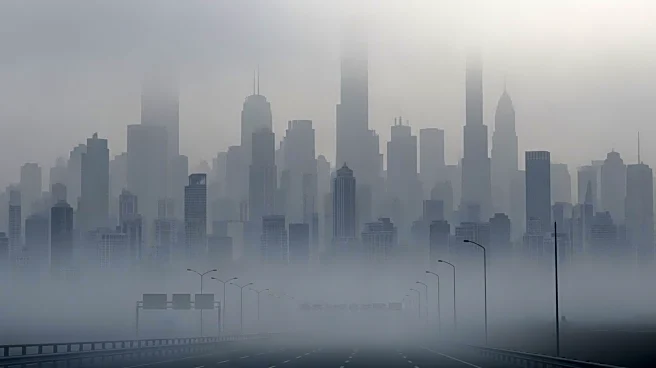
New Delhi is experiencing severe air pollution, with toxic smog pushing air quality to hazardous levels. The smog has disrupted travel, leading to the cancellation of over 40 flights and delays for more than 50 trains. Health experts are advising residents
to avoid outdoor activities due to the influx of patients with respiratory issues. The air quality index has reached levels over 450, significantly higher than the safe limit of 50. Authorities have implemented measures such as banning construction activities and restricting diesel generators to combat the pollution.
Why It's Important?
The smog crisis in New Delhi highlights the ongoing environmental challenges faced by rapidly urbanizing regions. The health implications are severe, with long-term exposure to polluted air linked to increased mortality rates. The situation underscores the need for sustainable urban planning and stricter environmental regulations. The economic impact is also significant, as travel disruptions affect commerce and tourism. The crisis serves as a reminder of the global nature of environmental issues, with potential lessons for other cities facing similar challenges.
What's Next?
Authorities in New Delhi are likely to continue implementing emergency measures to address the immediate crisis. However, long-term solutions will require comprehensive policy changes and international cooperation. The Indian government may face increased pressure to develop sustainable strategies to reduce pollution, such as investing in renewable energy and improving public transportation. The situation could also prompt further research into the health impacts of air pollution and the effectiveness of various mitigation strategies.
Beyond the Headlines
The smog crisis in New Delhi reflects broader environmental and public health challenges. It raises questions about the balance between economic development and environmental sustainability. The situation also highlights the role of government and civil society in addressing environmental issues and protecting public health. The crisis could lead to increased awareness and advocacy for environmental justice and policy reform.