



What's Happening?
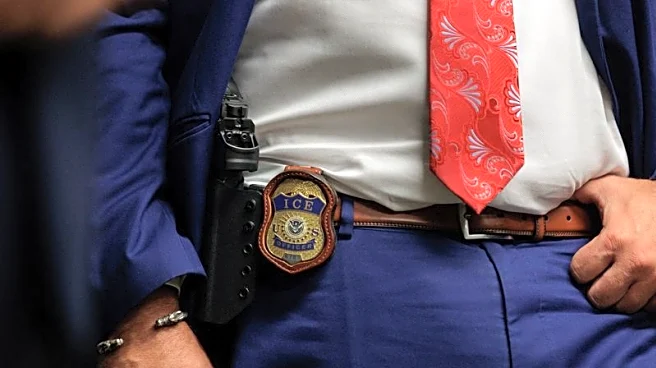
Estefany Rodriguez Florez, a Colombian journalist working for Nashville Noticias, was detained by U.S. Immigration and Customs Enforcement (ICE) during a traffic stop in Nashville. ICE claims the arrest was part of an enforcement operation related to alleged
visa violations. Rodriguez, who has lived in the U.S. for five years, holds a valid work permit and is seeking legal residency through marriage to a U.S. citizen. Her attorney argues that Rodriguez was not shown a judicial arrest warrant, only receiving an immigration notice to appear before ICE. Press freedom advocates and civil liberties groups have raised concerns about the arrest, suggesting it could undermine journalistic independence and chill coverage of immigration issues.
Why It's Important?
The detention of Rodriguez has sparked significant concern among press freedom and immigrant rights organizations. The National Association of Hispanic Journalists has condemned the arrest, emphasizing the potential chilling effect on journalists covering immigration and community issues. Rodriguez's work has been crucial in reporting on matters affecting the Spanish-speaking population in Nashville. Her arrest raises questions about the balance between immigration enforcement and the protection of journalistic freedom, potentially impacting how immigration issues are covered in the media. The case highlights ongoing debates about due process and the rights of journalists, especially those reporting on sensitive topics.
What's Next?
Rodriguez remains in ICE custody as her case progresses through federal court. Her attorneys are advocating for her release, arguing that her constitutional rights were violated during the arrest. Press freedom organizations, including the Committee to Protect Journalists, are urging authorities to ensure protections for reporters and to release Rodriguez. The outcome of this case could set a precedent for how journalists are treated in immigration enforcement actions, influencing future interactions between law enforcement and the press.