


What's Happening?
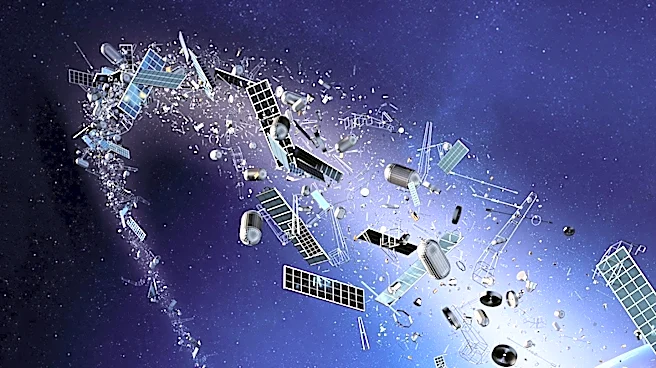
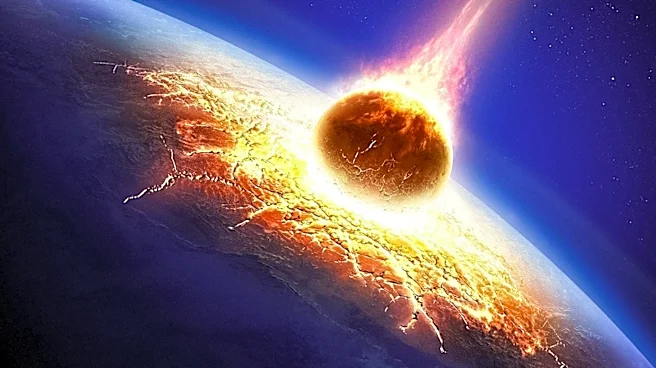
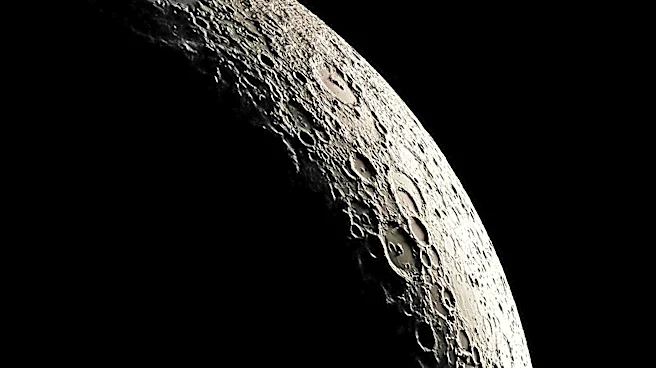
New research based on rocks collected from the Moon's far side suggests that the early Solar System experienced a gradual decline in asteroid impacts rather than a single catastrophic event. This finding challenges the long-held theory of a late heavy
bombardment, a period when the inner Solar System was thought to have been bombarded by a sudden surge of impacts. The study, involving analysis of lunar rocks, indicates that the bombardment weakened over billions of years as the Solar System cleared debris. This gradual decline in impacts could reshape scientists' understanding of planetary history, including the conditions that influenced the emergence of life on Earth.
Why It's Important?
The study's findings have significant implications for our understanding of the early Solar System and the history of Earth. By suggesting a gradual decline in asteroid impacts, the research challenges the notion of a late heavy bombardment and provides a new perspective on how planetary environments evolved. This could influence theories about when Earth's crust stabilized and when conditions became suitable for life. The Moon's far-side rocks offer a rare archive of the Solar System's violent beginnings, providing insights that are not available from Earth's geologically active surface.
What's Next?
The findings from the Moon's far-side rocks are likely to prompt further research into the history of asteroid impacts in the Solar System. Scientists may focus on analyzing additional lunar samples to refine the timeline of impacts and better understand their effects on planetary evolution. The study also highlights the importance of lunar exploration, with future missions potentially providing more data to test and expand upon these findings. As researchers continue to study the Moon's geological history, they may uncover new information about the early conditions that shaped both the Moon and Earth.