



What's Happening?
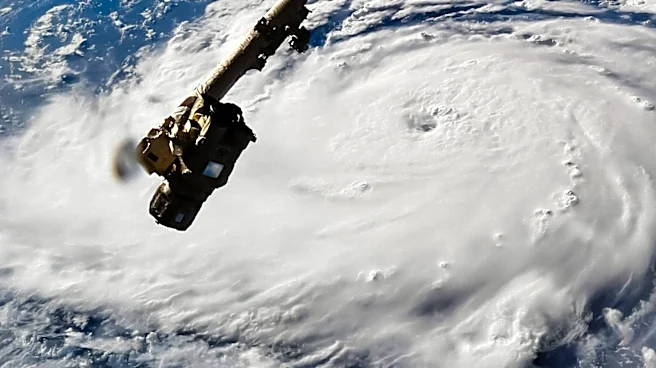
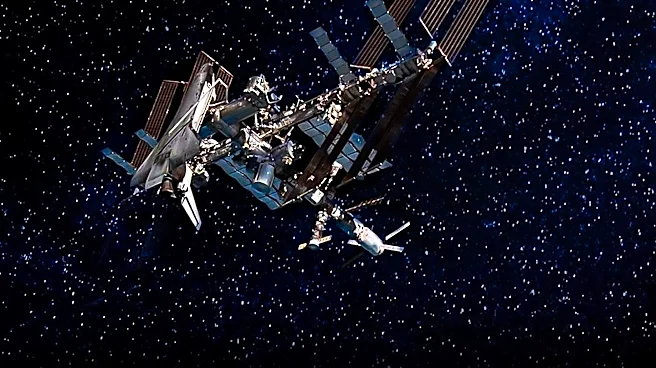
NASA astronauts are preparing for the second and final spacewalk in a series aimed at upgrading the International Space Station's (ISS) power generation system. Flight engineers Joshua Kutryk of CSA and Anil Menon of NASA are scheduled to install the eighth
and final roll-out solar array on Thursday. This spacewalk, expected to last about seven hours, will take place on the orbital outpost's starboard truss structure. Upon completion, the station's power generating capacity is projected to increase by approximately 30%, from 160 kilowatts to about 215 kilowatts. NASA+ will provide live coverage of the spacewalk starting at 7 a.m. EST on Thursday. The crew has also been conducting life science research, including studies on cardiorespiratory adaptation to weightlessness, nourishing vascular tissue samples, and verifying a portable DNA sequencer for analyzing antibiotic-resistant bacteria in microgravity.
Why It's Important?
The successful installation of the final solar array is crucial for the continued operation and scientific research capabilities of the International Space Station. The 30% increase in power generation will allow for more extensive and power-intensive experiments, potentially accelerating discoveries in various fields, including human health, materials science, and biotechnology. This upgrade extends the operational lifespan of the ISS, a critical platform for international collaboration and long-duration spaceflight research, which is vital for future missions to the Moon and Mars. The life science research being conducted simultaneously underscores the ISS's role as a unique microgravity laboratory, providing insights into how the human body adapts to space, which is essential for ensuring astronaut well-being on future deep-space explorations. The data collected will inform crew health measures and technological advancements for future space endeavors.
What's Next?
Following the completion of this final spacewalk, the International Space Station will have significantly enhanced power capabilities, enabling more robust scientific research and operational flexibility. NASA and its international partners will continue to leverage the ISS for a wide array of experiments, focusing on preparing for future human missions beyond low-Earth orbit. The ongoing life science research will yield valuable data that will be analyzed to develop countermeasures for the physiological challenges of long-duration space travel. This information will directly influence mission planning, spacecraft design, and astronaut training for lunar and Martian expeditions. The increased power will also support the testing of new technologies and systems critical for sustainable human presence in space, further solidifying the ISS's legacy as a foundational element of space exploration.
Beyond the Headlines
The continuous upgrades to the ISS, such as the power system enhancement, highlight the long-term commitment of the U.S. and its partners to maintaining a human presence in space. This commitment extends beyond scientific discovery to fostering international cooperation and developing technologies that have terrestrial applications. The research on human health in microgravity, for instance, could lead to breakthroughs in understanding and treating conditions on Earth, such as osteoporosis or cardiovascular diseases. The development of advanced materials and biotechnology in space could also have significant economic and industrial impacts. Furthermore, the ISS serves as a symbol of humanity's aspiration for exploration and collaboration, inspiring future generations in STEM fields and demonstrating the potential for peaceful international partnerships in addressing complex challenges. The ongoing operations of the ISS contribute to a deeper understanding of our universe and our place within it.