
What's Happening?
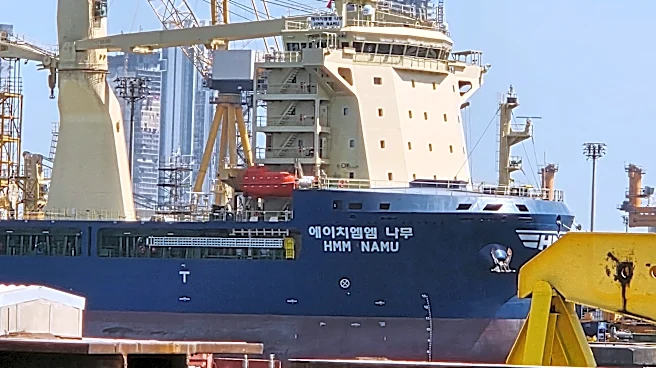
South Korea's presidential Blue House has strongly condemned an attack on a cargo ship operated by a Korean shipper in the Strait of Hormuz. The incident, which occurred earlier this month, resulted in damage
to the port stern of the vessel, leading to a fire in the engine room. The ship, named Namu and operated by HMM Co., was reportedly not violating any maritime rules at the time of the attack. South Korean officials, along with experts, conducted a forensic analysis of the damage at a port in Dubai. The role of Iran in the attack remains unclear, although Tehran has denied any involvement. U.S. President Donald Trump has suggested that Iran was responsible and has urged South Korea to join U.S.-led efforts to secure shipping in the strait.
Why It's Important?
The attack on the South Korean cargo ship highlights the ongoing tensions in the Strait of Hormuz, a critical maritime route for global oil shipments. This incident could escalate geopolitical tensions between South Korea, Iran, and the United States, potentially affecting international shipping and trade. The Strait of Hormuz is a strategic chokepoint, and any disruption could have significant implications for global oil prices and supply chains. South Korea's response to the attack will be closely watched by international stakeholders, as it may influence future maritime security policies and alliances in the region.
What's Next?
South Korea has vowed to respond once the source of the attack is identified. This could involve diplomatic measures or increased security cooperation with the United States and other allies. The situation may prompt South Korea to enhance its naval presence in the region or participate in international efforts to secure shipping lanes. The international community will be monitoring Iran's actions and statements closely, as any further developments could impact diplomatic relations and regional stability.