







What's Happening?
Begona Gomez, the wife of Spanish Prime Minister Pedro Sanchez, has been formally charged with corruption following a lengthy investigation. The probe, initiated in April 2024 by Judge Juan Carlos Peinado, seeks to determine whether Gomez exploited her position
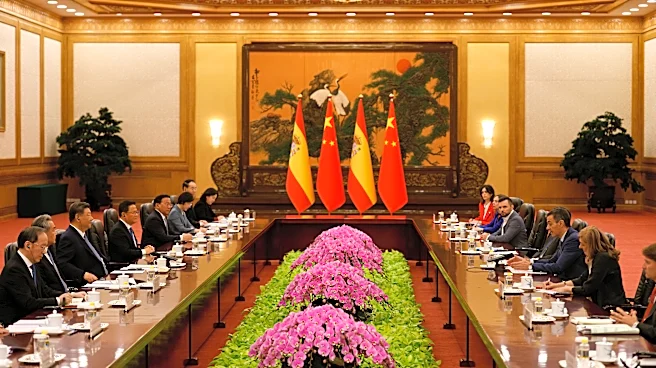
for private gain, allegations that both she and Sanchez deny. The investigation focuses on Gomez's involvement in the creation and management of a chair at Madrid's Complutense University, which she co-directed. The case also examines the alleged use of public resources and personal connections to advance private interests. The court ruling, made public on April 11, indicates sufficient evidence of criminal conduct, including embezzlement, influence peddling, and misappropriation of funds. Gomez, currently on an official visit to China with Sanchez, has consistently denied any wrongdoing.
Why It's Important?
The charges against Begona Gomez add pressure to Prime Minister Pedro Sanchez's minority coalition government, already embroiled in several corruption cases involving his family and former allies. This development could impact Sanchez's political standing and the stability of his government, as opposition parties call for his resignation. The case highlights ongoing concerns about corruption within political circles in Spain, potentially affecting public trust in government institutions. The investigation's outcome may influence future political dynamics and governance in Spain, as well as Sanchez's ability to implement his policy agenda.
What's Next?
The courts will decide whether Gomez will stand trial, a decision that could have significant political ramifications for Prime Minister Sanchez. As the investigation progresses, Sanchez may face increased pressure from opposition parties and public scrutiny. The outcome of the trial could affect Sanchez's political future and the stability of his government. Additionally, the case may prompt further investigations into corruption within the government, potentially leading to broader political reforms.
Beyond the Headlines
The case against Gomez underscores the ethical challenges faced by political figures and their families, raising questions about the influence of personal relationships on public governance. It also highlights the role of anti-corruption groups in holding public officials accountable, despite potential political biases. The investigation may lead to discussions on the need for stricter regulations and transparency in political appointments and the use of public resources.