





What's Happening?
The Federal Energy Regulatory Commission (FERC) has authorized a new natural gas pipeline to be installed under the Cape Cod Canal. This approval is a critical step for the $4.5 billion Sagamore and Bourne bridge replacement project to proceed. Jordan
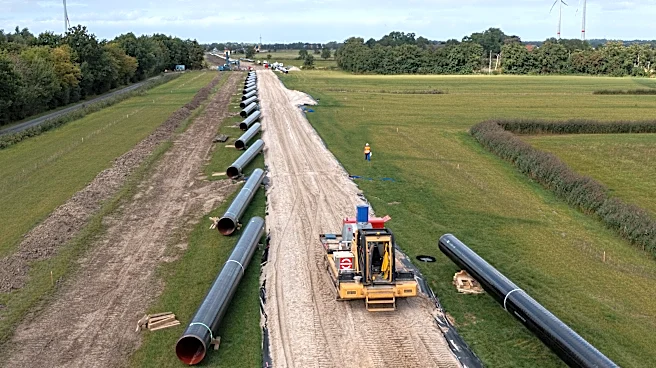
Velozo, chief regulatory officer for the Cape Cod Commission, announced this development at a subcommittee meeting on November 12. The subcommittee subsequently recommended the project to the full Cape Cod Commission for a final vote on November 19. The pipeline, to be installed by Algonquin Gas Transmission, a subsidiary of Canadian energy company Enbridge, will run from the mainland to Cape Cod, between the two bridges. The U.S. Army Corps of Engineers, owners of the bridges, deemed the pipeline relocation necessary due to ongoing maintenance and the eventual replacement of the existing bridges, which currently have gas lines attached to them. FERC, as the lead federal agency, holds exclusive authority under the Natural Gas Act to determine the necessity of interstate natural gas projects for public convenience. Enbridge spokesperson Melissa Sherburne stated that the project's sole purpose is to relocate existing facilities to ensure continued safe and reliable service to current customers, with FERC's review including an environmental assessment.
Why It's Important?
This federal authorization is significant as it potentially limits regional objections to the pipeline project, despite concerns raised by local groups. The Cape Cod Commission can still evaluate regional impacts and impose mitigation conditions, but it cannot conflict with federal requirements or unreasonably delay the project. The pipeline is crucial for maintaining natural gas supply to homes and businesses throughout Cape Cod, as Algonquin delivers gas to National Grid. The project's approval also marks a major milestone for the broader Sagamore and Bourne bridge replacement initiative, a vital infrastructure upgrade for the region. Critics, including members of the Sierra Club, have expressed dissatisfaction, questioning pipeline capacity and potential increases in methane gas emissions, despite FERC's conclusion that the project would not increase natural gas capacity. The balance between federal authority, regional environmental concerns, and critical infrastructure development is at play, highlighting potential conflicts in large-scale energy and infrastructure projects.
What's Next?
The full Cape Cod Commission is scheduled to consider the pipeline approval on November 19. Following this, Algonquin Gas Transmission will continue the permitting process, with gas line installation slated to begin in January 2027 and expected to be in service by August 2028. The project plans include abandoning portions of the existing pipeline and demolishing and replacing meter and regulating substations. The Cape Cod Commission staff has identified several regionally significant areas for review that are not preempted by federal law, including coastal wetlands, wildlife and plant life, open space, coastal resiliency, water resources, community design, cultural heritage, climate change, energy, infrastructure, and transportation. Public input and environmental group advocacy are expected to continue as the project progresses, particularly regarding mitigation efforts for environmental impacts such as tree removal and potential methane emissions. Negotiations with landowners for project areas are also ongoing.
Beyond the Headlines
The approval of the Cape Cod pipeline project underscores the complex interplay between federal regulatory power, local environmental concerns, and the necessity of maintaining critical energy infrastructure. While FERC's authorization streamlines the project, it also highlights the limitations of local oversight when federal agencies assert jurisdiction under acts like the Natural Gas Act. This scenario could set a precedent for future infrastructure projects where federal mandates might override regional environmental or community objections. The debate over pipeline capacity and methane emissions also reflects broader national discussions about energy policy, climate change, and the transition away from fossil fuels. The project's environmental mitigation commitments, such as minimizing wetland disturbance and restoring cleared land, will be closely watched as a test of regulatory effectiveness in balancing development with ecological preservation. The long-term implications for Cape Cod's environment and energy future remain a key point of contention.