
What's Happening?
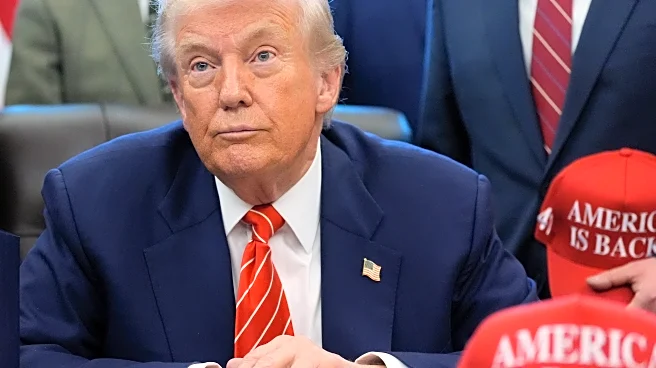
President Trump has recently reignited interest in acquiring Greenland, linking this ambition to grievances over the Nobel Peace Prize and threatening tariffs on European nations that oppose the move. This has led to concerns about a potential trade war
and tensions within NATO. The U.S. already holds significant rights in Greenland under a 1951 defense treaty with Denmark, allowing for military operations and infrastructure development. Despite this, Trump's proposal has been met with criticism from both allies and opponents, with some viewing it as a strategic move and others as a diplomatic misstep. The European Union is reportedly preparing retaliatory measures, viewing the tariff threats as diplomatic blackmail.
Why It's Important?
The proposal to acquire Greenland and the associated tariff threats could have significant economic and diplomatic repercussions. A trade war with Europe could lead to increased costs for American consumers, as tariffs are often passed down to consumers in the form of higher prices. Additionally, the move risks alienating key NATO allies, potentially pushing them closer to geopolitical rivals like China and Russia. The situation underscores the complexity of international relations and the potential costs of aggressive trade policies. The U.S. already has substantial military and strategic interests in Greenland, making the acquisition proposal more symbolic than practical.
What's Next?
The European Union's preparation for retaliatory measures suggests that diplomatic negotiations or trade disputes may follow. The U.S. may need to engage in diplomatic efforts to mitigate tensions and avoid a full-blown trade war. The situation could also prompt discussions within NATO about the implications of unilateral actions by member states. Domestically, the economic impact of tariffs could become a point of contention, influencing public opinion and political discourse.
Beyond the Headlines
The proposal to acquire Greenland highlights broader themes of national sovereignty and international law. It raises questions about the ethical implications of territorial acquisition in the modern era and the balance between strategic interests and diplomatic relations. The situation also reflects the ongoing challenges of climate change, as Greenland's strategic importance is partly due to its natural resources and geographic location in a warming Arctic.