



What's Happening?
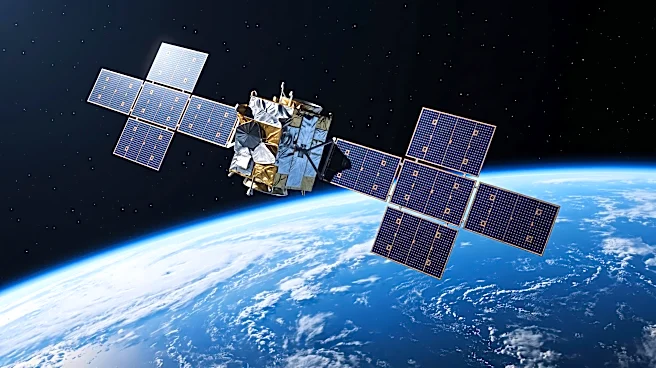
The European Space Agency's (ESA) Jupiter Icy Moons Explorer (Juice) is preparing for its third Earth flyby on September 28, 2026. This maneuver is a critical step in its eight-year journey to Jupiter. The spacecraft, launched in April 2023, has already
completed a lunar-Earth flyby and a Venus flyby to gain momentum and adjust its trajectory. During this upcoming flyby, Juice will pass within 8640 km of Earth, specifically over the Indian Ocean at 13:45 CEST (11:45 UTC). This interaction is designed to deflect the spacecraft's path by approximately 20 degrees and increase its velocity by about 3.5 km/s. Flight controllers have been conducting a 'navigation campaign' since August 17, making tiny corrections to ensure the spacecraft arrives at the optimal angle and velocity for the gravity assist. A final emergency maneuver is prepared for the day of the flyby, though it is hoped not to be needed. Additionally, Juice will operate on battery power during a period in Earth's shadow, prioritizing essential instrument observations.
Why It's Important?
This Earth gravity assist is vital for the Juice mission as it significantly reduces the amount of fuel required for the spacecraft to reach Jupiter. By utilizing the gravitational pull of Earth, the mission can achieve the necessary speed and trajectory adjustments almost 'for free,' conserving fuel that will be crucial for its extensive operations once it reaches the Jovian system. This strategy allows Juice to have sufficient fuel reserves to enter orbit around Jupiter in 2031 and later around its moon Ganymede in 2034, enabling detailed observations of Jupiter and its icy moons. The success of this flyby directly impacts the mission's ability to characterize these moons, which are considered potential habitats for past or present life, and to study Jupiter's complex magnetic, radiation, and plasma environment. The mission, a collaborative effort with contributions from NASA, JAXA, and the Israel Space Agency, represents a significant international scientific endeavor in space exploration.
What's Next?
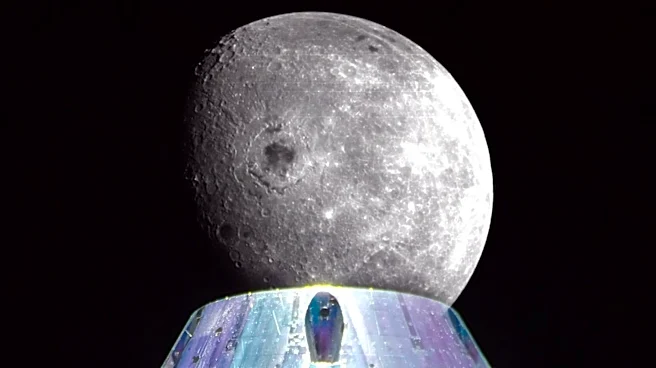
Following the September 28, 2026, Earth flyby, Juice will undertake one final Earth flyby in January 2029. This last gravitational assist will precisely position the spacecraft onto its optimal path to intercept Jupiter in July 2031. Upon arrival, Juice will commence its primary mission, which includes 35 flybys of Jupiter's three large icy moons—Ganymede, Callisto, and Europa—while orbiting Jupiter. Subsequently, it will change orbits to focus specifically on Ganymede. During the upcoming flyby, Juice's 10 science instruments will be activated between September 23 and October 3 to collect data on Earth and the Moon. This 'bonus science' opportunity allows instrument teams to calibrate their equipment and refine data analysis tools, preparing them for the main scientific data collection at Jupiter. The mission will also test a new technique for optical navigation using its navigation camera, pointing it towards the Moon's horizon.
Beyond the Headlines
The Juice mission's reliance on multiple gravity assists highlights a sophisticated and cost-effective approach to deep space exploration, minimizing the need for massive fuel consumption and larger rockets. This method, while extending travel time, maximizes the scientific return by preserving resources for in-situ observations. The 'bonus science' conducted during flybys, such as studying Earth's magnetotail and calibrating instruments, demonstrates the adaptability and multi-faceted nature of modern space missions. These opportunities not only provide valuable data about our own planet but also refine the tools and techniques necessary for understanding distant celestial bodies. The international collaboration involved in Juice, with contributions from NASA, JAXA, and the Israel Space Agency, underscores the global effort in advancing humanity's understanding of the universe and the potential for life beyond Earth, particularly in the intriguing icy moons of Jupiter.