









What's Happening?
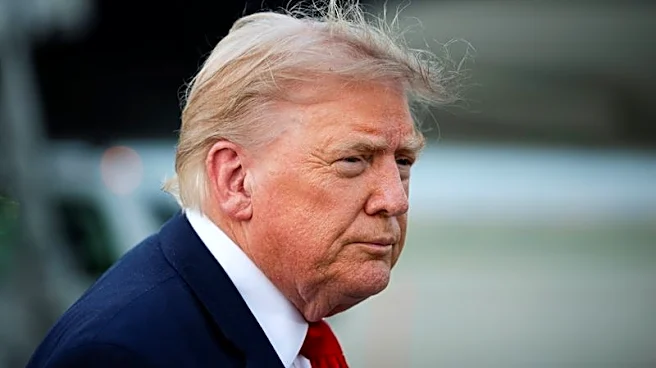
President Donald Trump has initiated the use of the Alien Terrorist Removal Court, a legal mechanism established in 1996 but never before utilized, to remove a suspected alien terrorist from the United States. The application, submitted by the U.S. government,
remains under seal, and the identity of the individual involved has not been disclosed. This move represents a significant step in the Trump administration's efforts to intensify immigration enforcement. The court, created under the Antiterrorism and Effective Death Penalty Act, allows for the removal of noncitizens accused of terrorism-related activities while safeguarding classified intelligence. The court's chief judge, Joan N. Ericksen, has ordered the government to provide additional factual and legal analysis to meet statutory obligations, with a deadline set for July 22, 2026.
Why It's Important?
The activation of the Alien Terrorist Removal Court underscores a heightened focus on national security and immigration control under President Trump's administration. This development could set a precedent for future cases involving suspected terrorists, potentially leading to more frequent use of this court. The decision to employ this court highlights the administration's commitment to using all available legal tools to address perceived threats. This action may influence public opinion on immigration policies and national security measures, potentially affecting legislative priorities and the political landscape. Stakeholders such as civil rights groups may express concerns over due process and the protection of individual rights, while proponents may argue for the necessity of such measures in safeguarding national security.
What's Next?
The court's decision to require additional information from the government suggests that further legal proceedings are imminent. The outcome of this case could influence future applications to the Alien Terrorist Removal Court, potentially leading to more stringent immigration enforcement. The administration's approach may prompt reactions from political leaders, advocacy groups, and the public, potentially impacting upcoming elections and policy debates. The case's progression will be closely monitored by legal experts and civil rights organizations, who may challenge the use of this court on constitutional grounds.