







What's Happening?
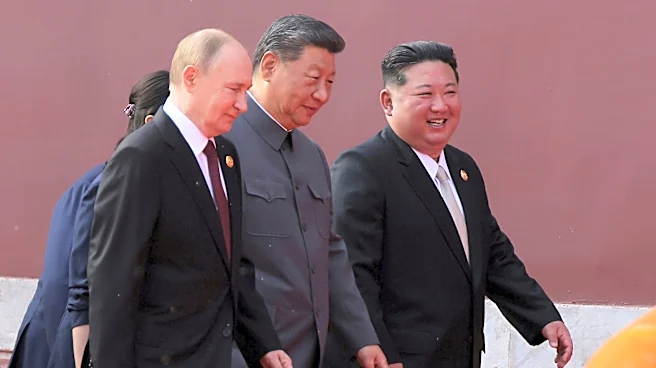
Chinese President Xi Jinping concluded his first visit to North Korea in seven years, marking a significant step in the relationship between the two nations. During the summit in Pyongyang, Xi and North Korean leader Kim Jong Un agreed to enhance cooperation
in politics, economy, and culture. This visit comes as North Korea has been strengthening its ties with Russia, potentially shifting the regional balance of power. The leaders symbolically planted a fir tree to represent their 'ever-renewing friendship' and visited a political training school, underscoring their commitment to a renewed alliance. Xi's visit aimed to reassert China's influence over North Korea, which has been a key ally but has recently shown signs of diversifying its international relations.
Why It's Important?
The strengthening of ties between China and North Korea could have significant implications for regional stability and international diplomacy. As North Korea continues to develop its nuclear capabilities, the lack of public discussion on this issue during Xi's visit suggests a strategic shift in China's approach. This could complicate efforts by the United States and its allies to denuclearize the Korean Peninsula. China's support is crucial for North Korea, both economically and politically, and this renewed alliance may embolden Pyongyang in its international dealings. For the U.S., this development could mean a more challenging diplomatic landscape, as China and North Korea present a united front on key issues.
What's Next?
The visit sets the stage for increased strategic communication between China and North Korea, with potential high-level exchanges and cooperation in various sectors. However, the absence of nuclear discussions raises questions about future negotiations on denuclearization. The U.S. and its allies may need to reassess their strategies in dealing with North Korea, considering China's apparent acceptance of North Korea's nuclear status. This could lead to a recalibration of diplomatic efforts and alliances in the region, as stakeholders navigate the complexities of this evolving geopolitical landscape.