

What's Happening?
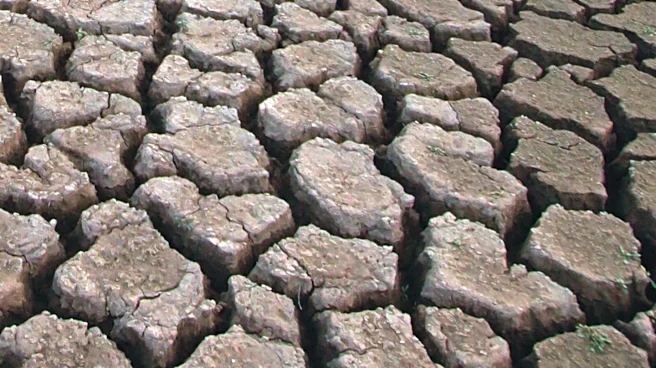
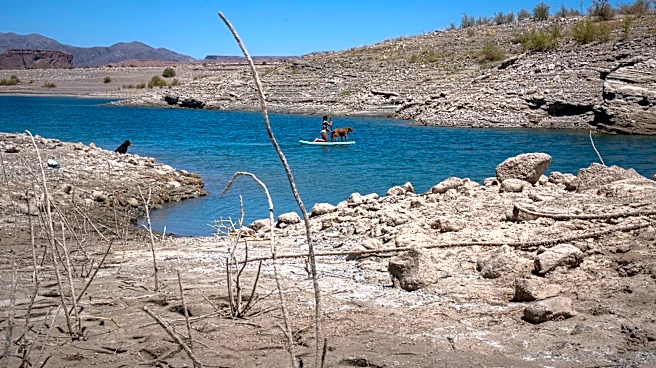
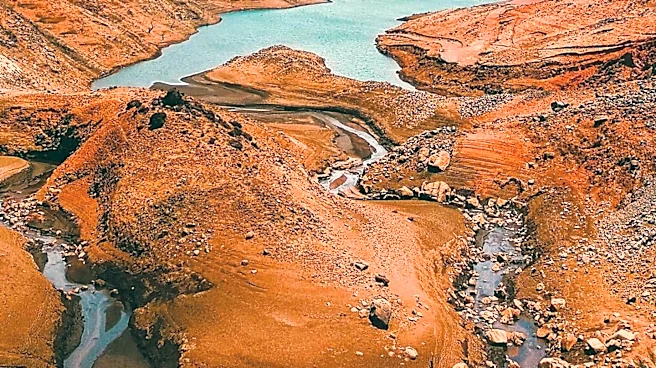
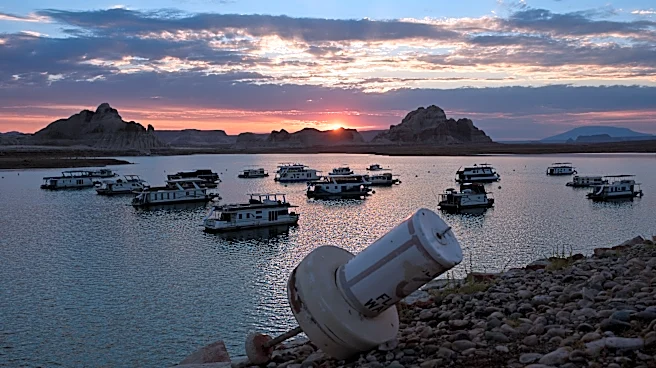
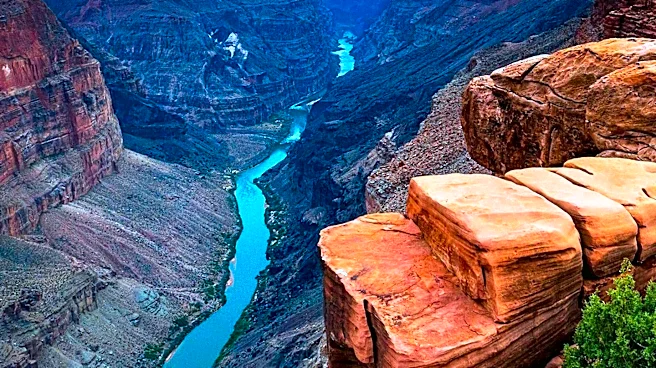
The U.S. Department of the Interior has proposed significant water usage cuts for Arizona, California, and Nevada due to historic low levels in the Colorado River. The proposal mandates a 20% reduction in water usage over the next two years for these
states, which are part of the Lower Basin. This decision comes as the combined water levels of Lake Mead and Lake Powell, the two largest reservoirs in the U.S., have reached their lowest since 1957. The proposal aims to address the severe drought conditions and overuse of the river, which supplies water to over 35 million people and supports significant agricultural activities. The plan allows for flexibility, with deeper cuts during drier periods, and is designed to ensure the river system remains reliable and resilient.
Why It's Important?
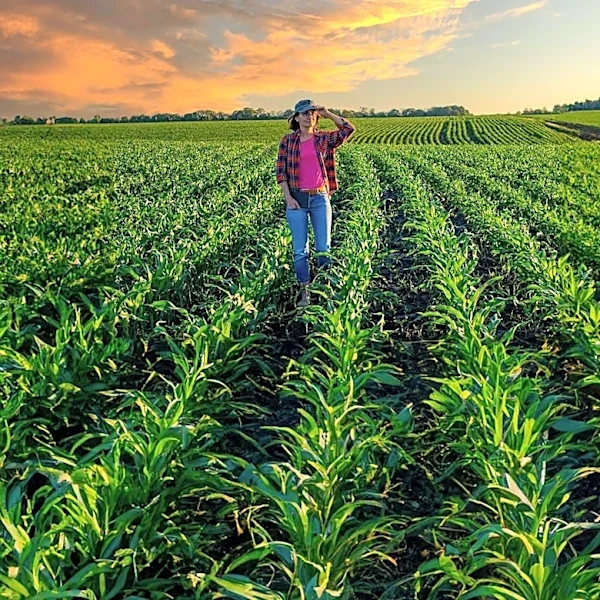
The proposed cuts are crucial as they address the ongoing water crisis affecting millions of Americans and the agricultural sector that relies heavily on the Colorado River. The reductions could lead to increased water prices and force cities and agricultural sectors to seek alternative water sources, which are often more expensive. This situation highlights the broader challenges of water management in the face of climate change and prolonged droughts. The proposal also underscores the need for collaborative solutions among the states that depend on the river, as failure to manage the resource effectively could have severe economic and social consequences.
What's Next?
The proposal is expected to face scrutiny and potential legal challenges from the affected states, particularly Arizona, which has expressed concerns about the economic impact of the cuts. The federal government plans to release binding operating guidelines by October 1, which will further detail how the cuts will be implemented. Stakeholders, including state governments and agricultural sectors, will need to negotiate and adapt to these new guidelines to mitigate the impact on their water supply and economic activities.