







What's Happening?
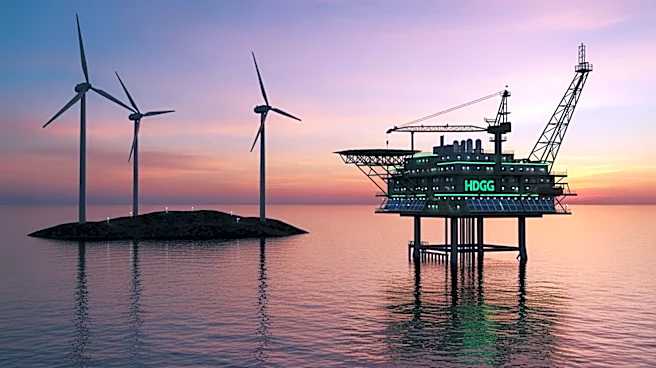
Three U.S. Gulf states—Louisiana, Mississippi, and Texas—are collaborating on a five-year initiative to repurpose offshore oil and gas platforms for green hydrogen production and aquaculture. This project has secured a $20 million grant from the Gulf Research
Program at the National Academies of Sciences, Engineering, and Medicine. The initiative aims to leverage existing oil and gas infrastructure to support the transition to renewable energy sources, particularly green hydrogen, which is produced using electrolysis powered by renewable energy. The project involves multiple partners, including Texas A&M University-Corpus Christi, University of Michigan, and the University of Houston, among others. The effort is part of a broader strategy to utilize the Gulf's renewable energy potential, despite its historical reliance on fossil fuels.
Why It's Important?
This initiative is significant as it represents a shift towards sustainable energy practices in a region traditionally dominated by fossil fuel industries. By repurposing existing infrastructure, the project aims to reduce the environmental impact of decommissioning oil platforms while fostering economic growth through renewable energy. The development of green hydrogen could position the Gulf states as leaders in the energy transition, potentially creating new jobs and industries. Additionally, the project aligns with global efforts to reduce carbon emissions and combat climate change, offering a model for other regions with similar infrastructure.
What's Next?
The project will begin with platform permitting, stakeholder engagement, and structural assessments, with the goal of having five operational platforms by 2030. These platforms are expected to produce measurable environmental and economic benefits. The initiative could also stimulate interest from other stakeholders in the renewable energy sector, potentially leading to further investments and developments in green hydrogen and related technologies. The success of this project could encourage other regions to explore similar repurposing strategies, contributing to a broader shift towards sustainable energy solutions.
Beyond the Headlines
The project highlights the potential for innovative solutions in the energy sector, particularly in regions with significant fossil fuel infrastructure. It also underscores the importance of collaboration between academic institutions, industry, and government in driving the energy transition. The initiative could have long-term implications for energy policy and economic development in the Gulf region, as well as for global efforts to reduce reliance on fossil fuels. Additionally, the project may influence public perception of renewable energy, demonstrating its viability and benefits in traditionally conservative areas.