
What's Happening?
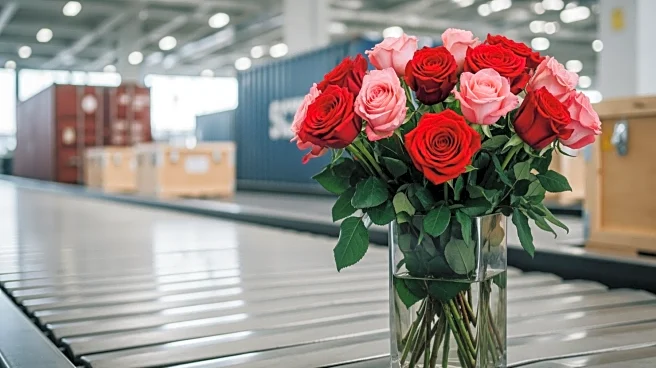
Miami International Airport is experiencing a significant increase in flower imports ahead of Valentine's Day, despite facing higher tariffs and costs. According to U.S. Customs and Border Protection,
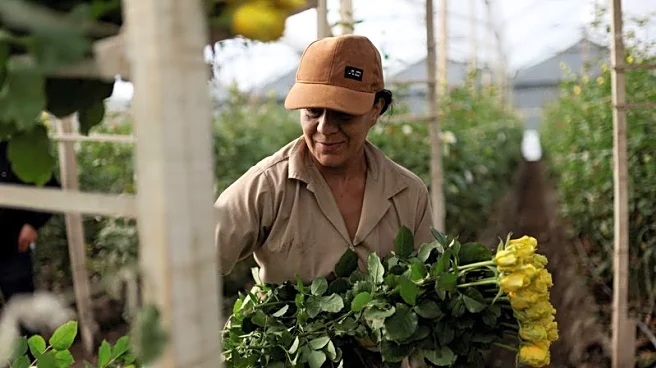
approximately 990 million stems of cut flowers are processed at the airport in the weeks leading up to February 14. The majority of these flowers, including roses, carnations, and chrysanthemums, are imported from Colombia and Ecuador. Avianca Cargo, a major flower importer based in Medellín, Colombia, is operating 320 full cargo flights to transport about 19,000 tons of flowers, more than doubling their usual number of flights. The increase in flower imports is occurring despite higher prices due to tariffs and a new minimum wage in Colombia, which have added significant costs to the bouquets.
Why It's Important?
The surge in flower imports at Miami International Airport highlights the critical role the airport plays in the U.S. floral industry, especially during peak seasons like Valentine's Day. With 90% of the fresh cut flowers for Valentine's Day in the U.S. passing through Miami, the airport is a vital hub for the floral supply chain. The increased costs due to tariffs and wage changes in Colombia could impact consumer prices, potentially affecting demand. However, the continued high volume of imports suggests strong consumer interest in floral gifts, underscoring the cultural significance of flowers in holiday celebrations. The rigorous inspection process by CBP to prevent pests and diseases is crucial for protecting the U.S. agricultural industry.
What's Next?
As Valentine's Day approaches, the focus will be on how the increased costs affect consumer purchasing behavior. Retailers and florists may need to adjust pricing strategies to accommodate higher import costs. Additionally, the ongoing inspection efforts by CBP will continue to be essential in safeguarding the U.S. floral and agricultural industries from potential pest and disease threats. The outcome of these inspections could influence future import regulations and practices.