



What's Happening?
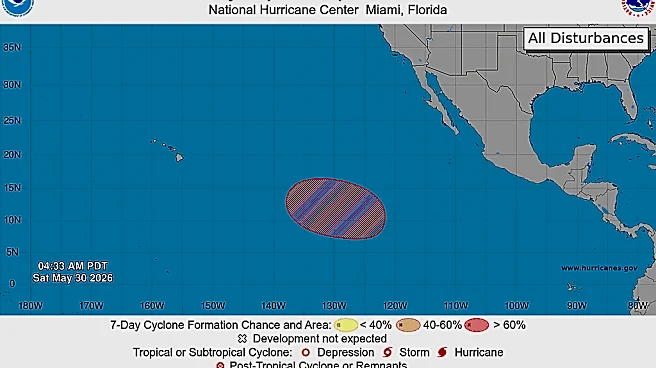
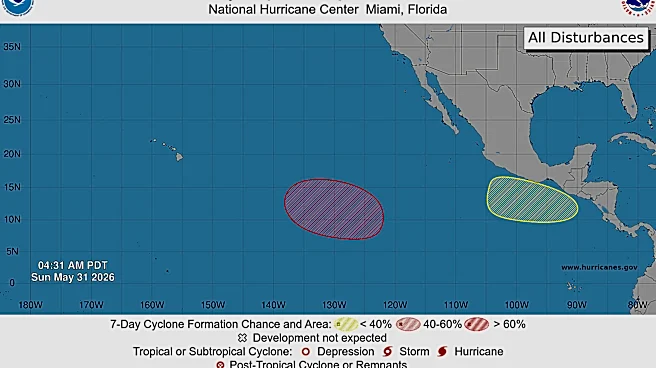
The National Hurricane Center (NHC) is closely monitoring a tropical system in the eastern Pacific with a high probability of development next week. This potential cyclone represents one of the first significant formation signals of the 2026 eastern Pacific season,
contrasting with the currently inactive Atlantic basin. The Pacific hurricane season typically begins earlier than the Atlantic, but this year has been unusually quiet, with no named storms recorded as of late May. The NHC has indicated that a broad area of low pressure is expected to form southwest of the Baja California Peninsula, with environmental conditions favorable for development. A tropical depression is likely to form by mid-week as the system moves west or west-northwest. Meanwhile, the Atlantic hurricane season, which officially starts on June 1, is projected by the National Oceanic and Atmospheric Administration (NOAA) to be below-normal, with fewer named storms and hurricanes expected.
Why It's Important?
The potential development of a cyclone in the Pacific highlights the ongoing need for vigilance despite projections of a below-normal hurricane season. While the Atlantic is expected to be less active, any storm that forms close to land or strengthens rapidly can still pose significant threats to coastal regions. The NHC's monitoring efforts are crucial for early warning and preparedness, especially as federal emergency resources face constraints. FEMA's disaster fund is reportedly low, raising concerns about the agency's capacity to respond effectively to major storms without additional congressional support. The situation underscores the importance of disaster readiness and the potential impact of budgetary and logistical challenges on emergency response capabilities.
What's Next?
As the Pacific system develops, the NHC will continue to provide updates and forecasts to inform and prepare affected regions. The potential cyclone's path and intensity will be closely watched, with implications for marine conditions and long-range weather patterns. Meanwhile, FEMA's operational capacity remains a concern, with ongoing discussions about shifting more disaster-response responsibilities to individual states. The agency's ability to manage the upcoming hurricane season will depend on swift policy adjustments and potential legislative action to bolster its resources.
Beyond the Headlines
The potential cyclone development in the Pacific also brings attention to the broader implications of climate patterns and their impact on weather systems. The distinction between cyclones and hurricanes, while primarily geographical, highlights the universal nature of these meteorological phenomena and their shared capacity for destruction. Additionally, the logistical and budgetary challenges faced by FEMA reflect broader issues of federal and state coordination in disaster management, emphasizing the need for efficient and adaptive response strategies in the face of evolving climate conditions.