
What's Happening?
The Israel Antiquities Authority has announced the completion of excavations that uncovered a significant section of Jerusalem's Hasmonean-period city wall. This fortification, dating back to the late
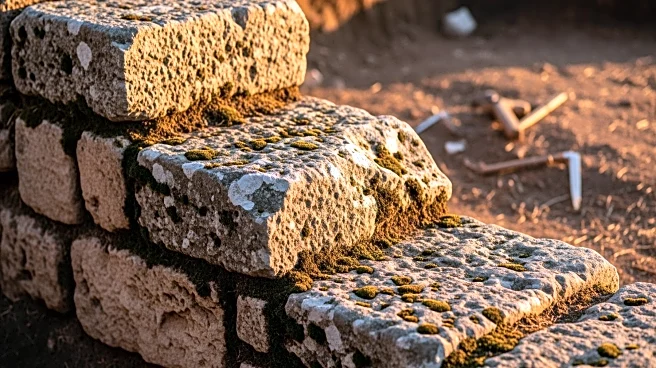
second century BCE, was found on the grounds of the Tower of David Jerusalem Museum within the historic Kishle complex. The newly exposed segment, identified as part of the 'First Wall,' extends over 40 meters and is approximately 5 meters thick. The wall, originally over 10 meters high, was constructed with large, hewn stones and is noted for its historical significance as described by the first-century Jewish historian Josephus. The excavation directors, Amit Re’im and Marion Zindel, noted signs of intentional destruction, suggesting a systematic effort to dismantle the fortification. Two theories have been proposed: one suggests the Hasmoneans dismantled the wall as part of a peace agreement with Seleucid ruler Antiochus VII Sidetes, while another posits that King Herod ordered its demolition to distance his rule from the Hasmoneans.
Why It's Important?
This archaeological discovery provides tangible evidence of Jerusalem's historical significance during the Hasmonean period, reinforcing narratives of the city's ancient might and stature. The findings offer insights into the political and military strategies of the era, particularly the Hasmonean-Seleucid conflict and subsequent peace agreements. The wall's destruction layer could indicate a strategic dismantling as part of a settlement, highlighting the complex power dynamics of the time. Additionally, the discovery contributes to the cultural and historical understanding of Jerusalem, enhancing its heritage value and offering new opportunities for educational and cultural engagement through the Tower of David Jerusalem Museum.
What's Next?
The Tower of David Jerusalem Museum plans to preserve and display the newly uncovered wall section as part of its new Schulich Wing, funded by the Schulich Foundation. Visitors will be able to view the wall through a transparent floor, accompanied by artistic interpretations that highlight the city's rich heritage. This development is expected to attract both local and international visitors, further promoting Jerusalem's historical and cultural significance. The museum's efforts to integrate archaeological findings into its exhibits will likely enhance public understanding and appreciation of Jerusalem's ancient history.