






What's Happening?
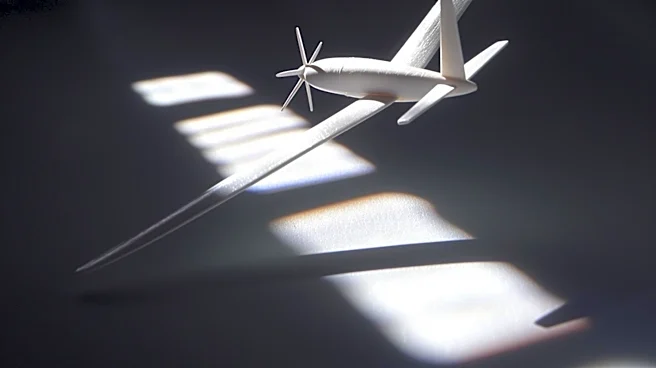
NASA has conducted a series of tests on a new wing design, known as the Structural Wing Experiment Evaluating Truss-bracing (SWEET-15), to determine its structural limits. The 15-foot wing, featuring a long and thin design supported by an aerodynamic
strut, is part of NASA's efforts to develop ultra-efficient aircraft. The tests, conducted at NASA's Armstrong Flight Research Center, involved bending the wing to assess its response to in-flight forces. The results confirmed the wing's ability to withstand anticipated forces, providing confidence in the new manufacturing approaches used. The test concluded with a deliberate test-to-failure, revealing the wing's structural resilience beyond its design limits.
Why It's Important?
The successful testing of the SWEET-15 wing design represents a significant advancement in aerospace technology, with potential implications for the future of commercial aviation. By developing more efficient wing designs, NASA aims to reduce fuel consumption and emissions, contributing to more sustainable air travel. The research supports the broader goal of enhancing aircraft performance while minimizing environmental impact. The findings also validate the use of advanced composite materials and innovative manufacturing techniques, which could lead to lighter and stronger aircraft structures. This progress aligns with NASA's mission to drive innovation in aeronautics and support the aviation industry's transition to greener technologies.
What's Next?
Following the successful tests, NASA researchers will analyze the collected data to inform future airframe designs and support ongoing efforts to develop more efficient aviation technologies. The insights gained from the SWEET-15 tests will contribute to the Subsonic Flight Demonstrator project, part of NASA's Research Technology Mission Directorate. As the agency continues to explore new designs and materials, collaboration with industry partners will be crucial to advancing these technologies and integrating them into commercial aircraft. The ongoing research will focus on optimizing wing designs for various aircraft types, ultimately leading to more sustainable and efficient aviation solutions.