







What's Happening?
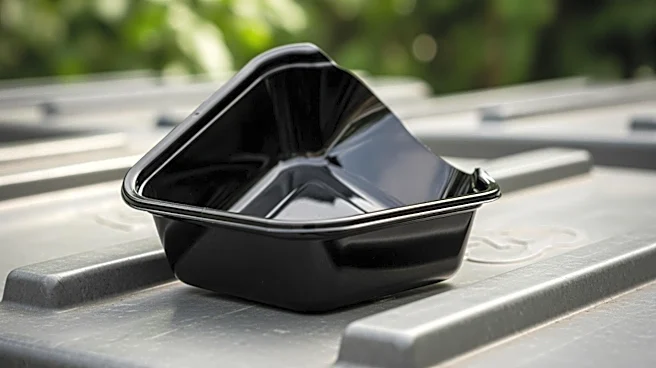
The recycling of black plastic containers poses significant challenges due to their non-recyclable nature, despite being commonly used in takeout and delivery services. These containers, often made from recycled materials, cannot be processed by current
recycling plant technologies, leading to their disposal in landfills. This issue is compounded by the practice of 'wish-cycling,' where individuals mistakenly place non-recyclable items in recycling bins, contaminating entire batches of recyclable materials. Jeremy Walters, a sustainability ambassador for Republic Services, highlights the importance of understanding local recycling guidelines to prevent such contamination. Additionally, other common takeout items like Styrofoam containers, oil-stained pizza boxes, and plastic utensils also contribute to recycling inefficiencies.
Why It's Important?
The inability to recycle black plastic containers and similar items has broader environmental implications, as it increases landfill waste and undermines recycling efforts. This situation highlights the need for improved public awareness and education on proper recycling practices. The contamination of recyclable materials due to improper disposal practices can lead to increased operational costs for recycling facilities and a higher environmental footprint. Encouraging the use of eco-friendly alternatives and better waste management practices can mitigate these issues, promoting sustainability and reducing the environmental impact of waste.
What's Next?
To address these challenges, there is a need for advancements in recycling technology that can handle a wider range of materials, including black plastics. Additionally, local governments and recycling companies may need to enhance public education campaigns to inform citizens about proper recycling practices. Restaurants and food service providers could also play a role by adopting more sustainable packaging options and encouraging customers to participate in eco-friendly practices. These steps could lead to a reduction in landfill waste and a more efficient recycling system.
Beyond the Headlines
The issue of non-recyclable black plastic containers underscores a larger cultural and systemic challenge in waste management. It reflects the need for a shift towards a circular economy, where materials are reused and recycled more effectively. This transition requires collaboration between consumers, businesses, and policymakers to create a sustainable waste management infrastructure. Additionally, it raises ethical considerations about consumer responsibility and the role of businesses in promoting environmental stewardship.