



What's Happening?
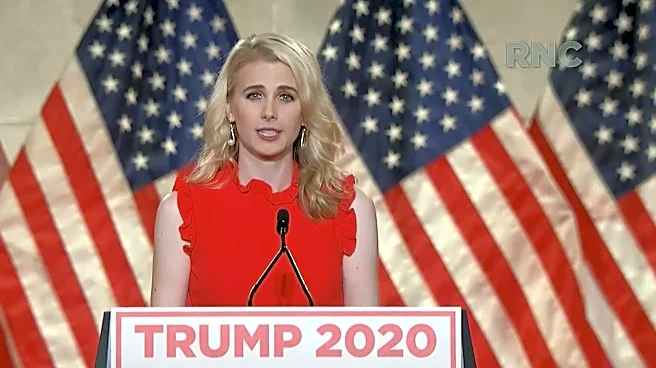
Letters written by Natalie Harp, a special assistant and executive assistant to President Trump, have reportedly alarmed the Secret Service and made some of her colleagues uneasy. The Daily Beast published the full content of these letters, which were
previously excerpted by Michael Wolff in his book 'All or Nothing' and by The New York Times. Maggie Haberman, a New York Times reporter, stated on CNN's 'The Source' that the Secret Service was concerned by some of the correspondence. Harp, a former right-wing cable host, expressed deep devotion to President Trump in the letters, referring to him as her 'Guardian and Protector in this life' and stating she is 'unworthy' of him. The letters, sent in 2023 before President Trump's re-election, reveal Harp's desire to shift from routine work duties, such as being his 'Human Printer,' to a more personal relationship. She expressed feelings of burnout and envy towards others whose roles seemed to involve merely talking with President Trump and 'looking pretty,' explicitly stating, 'I want that job!!' She also reminisced about earlier days when they would converse about 'everything and nothing,' lamenting that their current interactions are constantly work-focused. Harp apologized for minor incidents during an overseas trip, including being left without her passport and walking on a golf course, and admitted to neglecting her own well-being by forgetting to eat and sleep due to anxiety and grief over her father's passing. Her primary fear, she wrote, was being diminished in President Trump's estimation, aiming to bring him 'nothing but joy.'
Why It's Important?
The revelation of Natalie Harp's letters and the reported alarm from the Secret Service highlight potential concerns regarding the boundaries and nature of relationships within the highest levels of U.S. government. The intense personal devotion expressed in the letters, coupled with Harp's current role as a close aide, could raise questions about professional conduct, influence, and the security protocols surrounding a President. The Secret Service's reported concern suggests that the content or tone of the correspondence may have crossed perceived lines of appropriate interaction for a staff member. This situation could impact the perception of President Trump's inner circle and the dynamics within his administration, particularly concerning the flow of information and advice he receives. The letters also shed light on the psychological pressures and personal sacrifices that individuals in such close proximity to power may experience, including burnout and the blurring of professional and personal lives. For the public, it offers a glimpse into the less formal, yet potentially influential, aspects of presidential staffing, which could affect trust in government operations and decision-making processes.
What's Next?
The publication of Natalie Harp's letters and the reported concerns from the Secret Service could lead to increased scrutiny of staffing practices within the executive branch, particularly regarding the personal relationships between high-ranking officials and their aides. It is possible that internal reviews or policy clarifications regarding staff conduct and communication with the President may be considered, though no such actions have been announced. Media attention on the nature of these relationships is likely to continue, potentially prompting further commentary from political analysts and former government officials on the implications for presidential security and governance. The situation may also spark broader discussions about the psychological well-being of individuals in demanding political roles and the support systems in place to prevent burnout. For Natalie Harp, the public exposure of these deeply personal letters could affect her professional standing and her relationship with President Trump, as well as her colleagues. The incident may also influence how future administrations approach the vetting and management of personal staff to avoid similar situations.
Beyond the Headlines
Beyond the immediate political and security implications, Natalie Harp's letters touch upon deeper themes of power dynamics, personal identity, and the psychological toll of intense public service. The language used, particularly her self-description as 'unworthy' and President Trump as her 'Guardian and Protector,' suggests a highly asymmetrical relationship that could be interpreted through various lenses, including mentorship, dependency, or even a cult of personality. This raises ethical questions about the appropriate boundaries in professional relationships, especially when one party holds immense power. The expressed burnout and envy for a less demanding, more 'pretty' role highlight the often-unseen pressures and sacrifices demanded of political aides, contrasting the public image of power with the personal struggles of those behind the scenes. Furthermore, the revelation of such intimate correspondence, even if intended for a private audience, underscores the constant lack of privacy and intense public scrutiny faced by individuals in the political sphere, blurring the lines between personal and public life in a way that can have profound psychological impacts. This incident serves as a poignant reminder of the human element within the machinery of government, where personal emotions and vulnerabilities can intersect with national security and political operations.