

What's Happening?
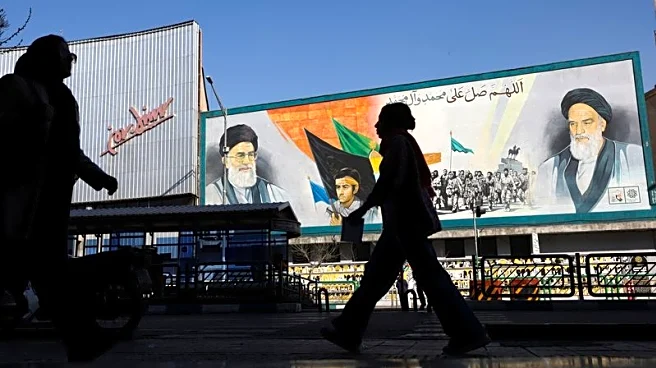
A recent AP-NORC poll indicates that a significant portion of Americans view Iran as an enemy, with 61% expressing this sentiment. The poll also reveals skepticism about President Trump's judgment on military force, with only about 30% of Americans expressing trust
in his decisions regarding military actions and foreign adversaries. The survey was conducted amid rising tensions between the U.S. and Iran, as both nations prepare for another round of nuclear talks. The poll highlights a generational divide, with younger Americans less concerned about Iran's nuclear program compared to older generations.
Why It's Important?
The poll's findings underscore the complex dynamics of U.S.-Iran relations and the domestic perception of foreign policy under President Trump. The lack of confidence in Trump's military judgment could influence public support for potential military actions and impact the administration's foreign policy strategies. The generational divide in perceptions of Iran's threat may also affect future policy decisions and political discourse. As the U.S. continues to navigate its relationship with Iran, public opinion will play a crucial role in shaping the administration's approach to diplomacy and military engagement.
What's Next?
The upcoming nuclear talks between the U.S. and Iran will be critical in determining the future of their relationship. Both countries have signaled readiness for conflict if negotiations fail, raising the stakes for diplomatic efforts. The U.S. has assembled a significant military presence in the Middle East, indicating preparedness for potential escalation. The outcome of these talks could influence global security dynamics and impact U.S. foreign policy priorities. Observers will be closely watching for any shifts in strategy or rhetoric from both nations as they seek to address longstanding nuclear tensions.