






What's Happening?
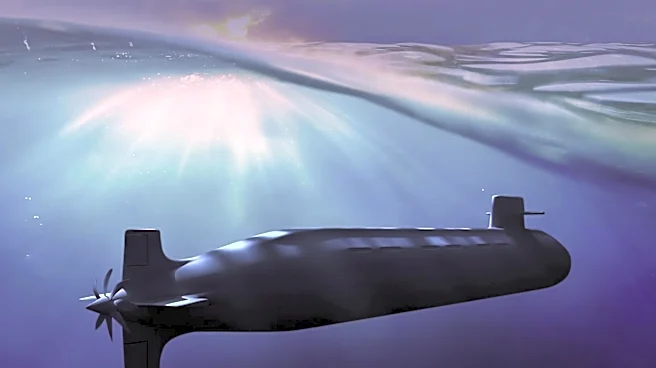
Arcfield is actively recruiting a Submarine Combat Systems Engineer to contribute to the future capabilities of the U.S. Navy's AN/BYG-1 Submarine Combat Control System. This position targets individuals with significant real-world fleet experience, such
as former Submarine Fire Control Technicians, SONAR Technicians, combat systems operators, or engineers. The role involves integrating an operational perspective into the research, development, testing, and engineering efforts for advanced submarine combat capabilities. Responsibilities include supporting full-spectrum R&D activities, providing operational insights on system requirements and concepts of operations (CONOPS), and translating fleet experience into technical recommendations for various stakeholders. The engineer will also participate in operational experimentation and evaluate submarine missile and torpedo systems. Candidates are expected to have deployed submarine experience, preferably at the E-6 level or above, and operational experience in Fast-Attack (SSN), Guided Missile (SSGN), or Ballistic Missile (SSBN) submarines. Experience in the United States European Command (EUCOM) or United States Indo-Pacific Command (INDOPACOM) areas of responsibility is highly valued. The position requires an active U.S. Government Secret security clearance and is based in Newport, RI, with flexible work schedules offered.
Why It's Important?
This recruitment is crucial for the U.S. Navy's ongoing efforts to modernize and enhance its submarine combat systems, directly impacting national security and strategic defense capabilities. By integrating experienced fleet personnel into the development process, Arcfield aims to ensure that future AN/BYG-1 systems are designed with practical operational needs and warfighter effectiveness in mind. The focus on real-world experience helps bridge the gap between theoretical engineering and actual combat scenarios, leading to more robust and effective technologies. The AN/BYG-1 system is a critical component of U.S. submarine warfare, controlling weapons, sensors, and tactical systems. Improvements to this system directly bolster the Navy's undersea dominance and its ability to project power and deter adversaries in key strategic regions like EUCOM and INDOPACOM. The investment in advanced combat systems also supports the U.S. defense industrial base and fosters innovation in military technology, ensuring the U.S. maintains a technological edge in naval operations.
What's Next?
The successful candidate will immediately begin contributing to the development and refinement of the U.S. Navy's AN/BYG-1 Submarine Combat Control System. Their work will directly influence future submarine combat capabilities, potentially leading to the deployment of enhanced systems in the coming years. This ongoing development will involve continuous collaboration with fleet operators, chief engineers, technical project managers, and program office liaisons. The insights gained from this role will be critical in shaping future naval capabilities and ensuring that new technologies meet the evolving demands of submarine warfare. The emphasis on operational experimentation and evaluation suggests a continuous feedback loop, where new concepts are tested and refined based on real-world applicability. This iterative process is vital for maintaining the U.S. Navy's technological superiority and adapting to emerging threats in the maritime domain.
Beyond the Headlines
The emphasis on integrating 'real-world fleet experience' into the development of advanced combat systems highlights a broader trend in military technology: the recognition that operational expertise is as vital as technical innovation. This approach seeks to prevent the development of sophisticated but impractical systems by ensuring that the end-users' perspectives are central to the design process. It also underscores the complex interplay between human factors and advanced technology in modern warfare. Furthermore, the requirement for experience in specific operational areas like EUCOM and INDOPACOM reflects the U.S. Navy's strategic priorities and the geopolitical realities of potential conflicts. This focus on regional expertise suggests a tailored approach to defense capabilities, acknowledging that different theaters of operation may require distinct technological adaptations and operational doctrines. The role also touches upon the ethical considerations of autonomous and semi-autonomous combat systems, as the engineer's operational perspective will help define how these technologies interact with human decision-making in high-stakes environments.