



What's Happening?
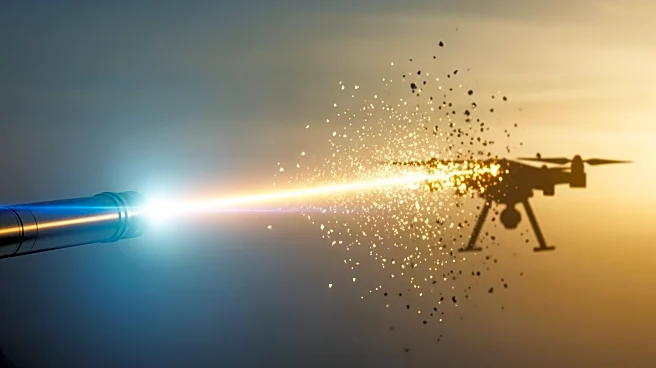
The Pentagon is urgently seeking the development and deployment of sensors capable of detecting small drones that pose threats to military installations across the United States. This initiative, led by the Defense Innovation Unit (DIU), is driven by the need
to address the increasing threat of unmanned aerial vehicles (UAVs) and ensure capability readiness. The project, titled 'Counter UAS Sensing for Homeland and Mobile Defense,' aims to protect both civil and military sites. The sensors must detect Group 1 UAVs, which are the smallest category, at a minimum range of 2 kilometers, and also have the capability to identify larger Group 2 and 3 drones. The DIU emphasizes the importance of these sensors being able to operate safely in populated areas and complex electromagnetic environments. Additionally, the sensors should be adaptable, with a preference for passive approaches to avoid detection by enemy forces.
Why It's Important?
The development of these counter-drone sensors is crucial for national security, as the proliferation of drones poses significant risks to both military and civilian infrastructure. The ability to detect and neutralize these threats is essential to maintaining the safety and security of U.S. installations. The urgency of this initiative highlights the growing concern over drone technology being used for malicious purposes, including espionage and attacks. By equipping military units with advanced detection systems, the Pentagon aims to enhance the protection of critical infrastructure and ensure the safety of personnel. This move also reflects the broader trend of integrating advanced technology into defense strategies to counter emerging threats.
What's Next?
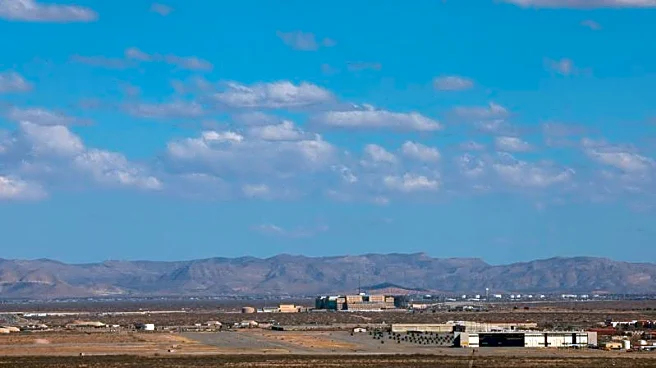
The DIU plans to conduct a demonstration of these counter-drone systems at the Yuma Proving Ground in Arizona by spring 2026. Companies invited to participate in this demonstration will have a short timeframe to prepare, indicating the high priority and rapid pace of this initiative. The successful deployment of these sensors could lead to widespread adoption across various military and civilian sites, potentially setting a new standard for drone defense systems. The outcome of this demonstration will likely influence future procurement and deployment strategies, as well as the development of new technologies to counter evolving drone threats.