
What's Happening?
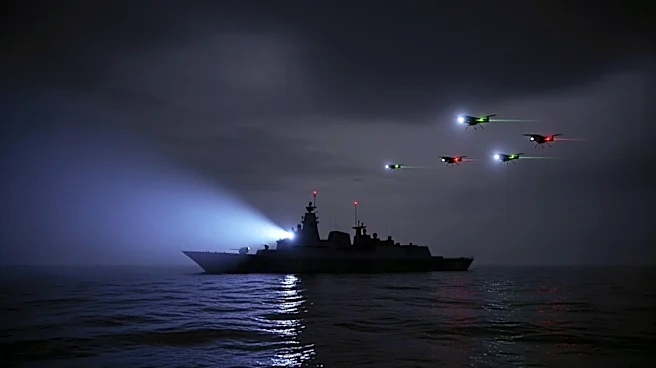
Ukrainian drones have successfully targeted the Russian corvette RFS Boiky at the Kronstadt naval base, marking a significant escalation in Ukraine's long-range strike capabilities. The attack, which occurred
on June 3, 2026, involved drones operated by Ukraine's Unmanned Systems Forces, striking the warship in dry dock. The strike caused substantial damage to the vessel's radar and electronic warfare systems, rendering it combat-ineffective. This incident is part of a broader Ukrainian campaign targeting Russian naval assets, which has expanded from the Black Sea to the Baltic region. The attack underscores Ukraine's strategic focus on degrading Russian military infrastructure and demonstrates the vulnerability of Russian naval defenses.
Why It's Important?
The strike on the RFS Boiky has significant implications for regional security and the ongoing conflict between Ukraine and Russia. By targeting a key naval asset, Ukraine not only disrupts Russian military operations but also sends a message about its ability to reach deep into Russian territory. This development could strain Russia's defense capabilities, as its industrial base is already under pressure from prolonged conflict and international sanctions. For NATO and European allies, the degradation of the Russian Baltic Fleet could reduce the threat posed by Russian naval operations in the region, potentially easing the burden on allied naval forces tasked with monitoring Russian movements. The attack also highlights the effectiveness of drone warfare in modern conflicts, raising concerns about the security of naval bases worldwide.
What's Next?
The attack on the RFS Boiky may prompt Russia to reassess its naval defense strategies, particularly in the Baltic region. Increased security measures and enhanced air defenses at key naval installations could be expected. Additionally, Russia might seek to accelerate repairs and replacements for damaged vessels, though this could be hampered by ongoing sanctions and resource constraints. For Ukraine, continued success in targeting Russian military assets could bolster its strategic position and encourage further international support. The incident may also lead to increased diplomatic tensions, as Russia could perceive the attack as a direct challenge to its military capabilities.
Beyond the Headlines
The use of drones in this attack highlights a shift in military tactics, where relatively low-cost technology can achieve significant strategic outcomes. This trend could influence future military planning and procurement strategies, as nations seek to defend against similar threats. The incident also raises ethical questions about the use of drones in warfare, particularly regarding the potential for collateral damage and the challenges of maintaining accountability in remote operations. As drone technology becomes more accessible, the risk of proliferation to non-state actors and rogue states could increase, posing new security challenges for the international community.