






What's Happening?
The Bezos Earth Fund, Andes Amazon Fund, Nia Tero, and Rainforest Trust have collectively pledged an initial $12.5 million towards permanent conservation efforts in Guyana. This commitment supports President Irfaan Ali's plan to establish lasting protection
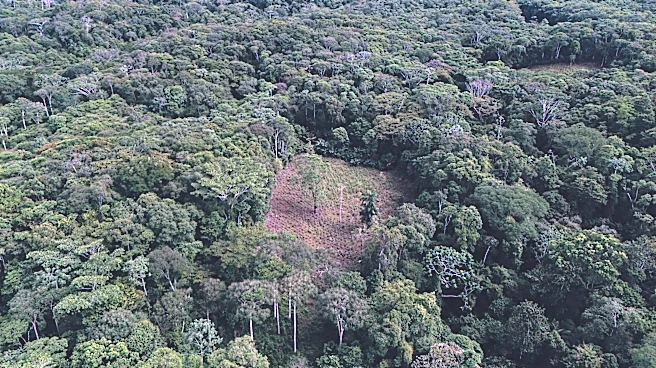
for the country's forests, freshwater systems, and biodiversity. The funding specifically targets the permanent protection of the Acarai–Rupununi Corridor, an area spanning over 1 million hectares (2.4 million acres), which is one of the largest intact forest landscapes remaining in the Americas. This initiative is part of Guyana's broader goal to protect 30% of its lands and waters by 2030, a key component of its Low Carbon Development Strategy. The pledge aims to ensure that the protected corridor gains permanent legal status with clear boundaries and safeguards against activities like mining and industrial logging, which are incompatible with conservation. Indigenous Peoples and local communities are central to this effort, with supported projects upholding their rights, including Free, Prior, and Informed Consent, and ensuring their meaningful involvement in conservation planning and management.
Why It's Important?
This significant financial pledge underscores a growing international recognition of the critical role that intact Amazonian forests play in global climate regulation and biodiversity preservation. For the U.S., the protection of these ecosystems contributes to broader environmental stability, which can mitigate the impacts of climate change, such as extreme weather events, that affect American communities and infrastructure. The involvement of U.S.-based organizations like the Bezos Earth Fund highlights a commitment from American philanthropic entities to global conservation, potentially influencing other U.S. businesses and foundations to invest in similar initiatives. Furthermore, safeguarding these forests helps preserve unique biodiversity, which could hold future benefits for scientific research, medicine, and sustainable resource management, areas where U.S. innovation often leads. The emphasis on Indigenous stewardship also aligns with evolving U.S. foreign policy considerations that prioritize human rights and community-led conservation, potentially setting a precedent for future international environmental collaborations.
What's Next?
The initial $12.5 million pledge is considered a foundational step, with donors anticipating the need for substantially greater and sustained investment from philanthropic, public, and private sources to meet Guyana's 30x30 conservation goal. Future efforts will focus on exploring durable financing arrangements for long-term stewardship, strengthening public institutions responsible for conservation, and continuing to support Indigenous Peoples and local communities as essential partners. The donors are actively inviting other public and private funders to join this initiative. The Government of Guyana, through its Ministry of Natural Resources, Guyana Forestry Commission, and Protected Areas Commission, will continue to lead the implementation of the 30x30 plan, with ongoing collaboration from Indigenous Peoples and local communities. The success of this initial phase will likely influence the scale and scope of future international funding and partnerships for conservation in the Amazon region.
Beyond the Headlines
The initiative highlights the complex interplay between environmental conservation, economic development, and Indigenous rights. Guyana's approach, where forest stewardship is seen as the foundation of its development model rather than a sacrifice, offers a potential paradigm for other developing nations. This model challenges traditional development narratives that often pit economic growth against environmental protection. The commitment to Free, Prior, and Informed Consent for Indigenous communities sets a crucial ethical standard, recognizing their historical role as custodians of these lands and their inherent rights. This approach could influence international legal frameworks and best practices for conservation projects globally, emphasizing that effective and equitable conservation must be community-led and rights-based. The long-term success of such initiatives will depend not only on financial investment but also on robust governance, sustained political will, and the ability to counter powerful illegal activities like logging and mining, which often have transnational connections.