





What's Happening?
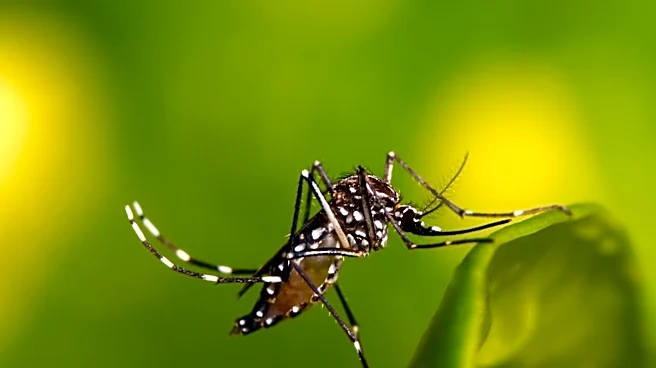
A recent study by University of Florida (UF) researchers at the Institute of Food and Agricultural Sciences (UF/IFAS) Florida Medical Entomology Laboratory (FMEL) has uncovered that Aedes aegypti, the primary mosquito responsible for dengue transmission,
is surprisingly common in residential yards in Indian River County. This finding contradicts initial expectations, as researchers anticipated a higher prevalence of Aedes albopictus, a secondary dengue-transmitting mosquito, given the area's suburban vegetation and residential setting. The study, titled 'How often, when, and where do people get bitten by mosquitoes? Characterizing human–mosquito contact using Bite Diary,' utilized a smartphone-based app to track mosquito bites and outdoor activities of participants, while simultaneously trapping mosquitoes in their residential yards. The research also indicated that the number of mosquitoes collected in a yard did not directly correlate with reported bites; instead, individuals spending more time outdoors during evening hours were more likely to report being bitten. This suggests that human behavior and exposure patterns play a significant role in mosquito bite incidence.
Why It's Important?
This research is crucial for public health officials in Florida, especially with the recent rise in dengue cases in the state. The unexpected prevalence of Aedes aegypti in residential areas highlights the need to re-evaluate current mosquito surveillance and control strategies. Traditional mosquito trapping in parks or empty lots may not accurately reflect the risk of dengue transmission, as these mosquitoes thrive in containers around homes. The study underscores that residential yards are critical areas for monitoring mosquitoes and understanding where people are most likely to encounter disease-transmitting species. This shift in understanding could lead to more targeted and effective public information campaigns focusing on personal protection and the reduction of water-holding containers in and around homes, which are prime breeding sites for Aedes aegypti and Aedes albopictus. The findings also emphasize the importance of integrating human behavioral data with mosquito surveillance to create a more comprehensive picture of mosquito exposure and disease risk.
What's Next?
The UF study's findings suggest a need for public health officials to adjust their mosquito prevention strategies, potentially shifting focus towards residential areas and educating homeowners on effective measures. Recommendations include minimizing water-holding containers and frequently emptying them, as these species can lay eggs and develop in very small amounts of water. Public information campaigns could be enhanced to emphasize personal protection, such as using repellents with active ingredients like DEET, picaridin, and PMD, especially during dawn and dusk when mosquitoes are more active. The study also advocates for the continued use of technology, like the Bite Diary app, to gather real-time information on human-mosquito interactions, which can provide a more complete understanding of disease transmission risks. Future efforts may involve closer collaboration between mosquito control districts and residents to implement targeted source reduction and personal protection measures in residential settings.
Beyond the Headlines
The study's revelation that Aedes aegypti, a significant vector for dengue, is more prevalent in residential yards than previously assumed has broader implications for urban planning and community engagement in public health. It suggests that the design and maintenance of residential spaces directly impact disease risk, moving beyond the traditional focus on natural habitats. This could lead to a re-evaluation of how communities manage green spaces, waste, and water storage in residential areas. Furthermore, the finding that human behavior, specifically time spent outdoors, is a stronger predictor of bites than mosquito density in a yard, highlights the need for public health messaging to be more nuanced and behavior-centric. It underscores the ethical dimension of individual responsibility in disease prevention, while also calling for accessible and effective tools and information to empower residents. This research could also spur innovation in personal protective measures and community-based surveillance systems, fostering a more collaborative approach to vector control.