







What's Happening?
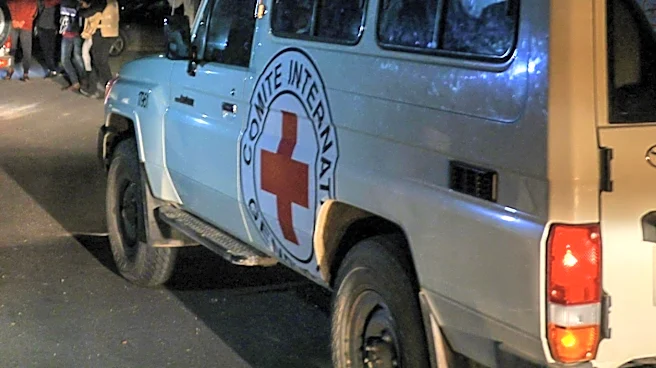
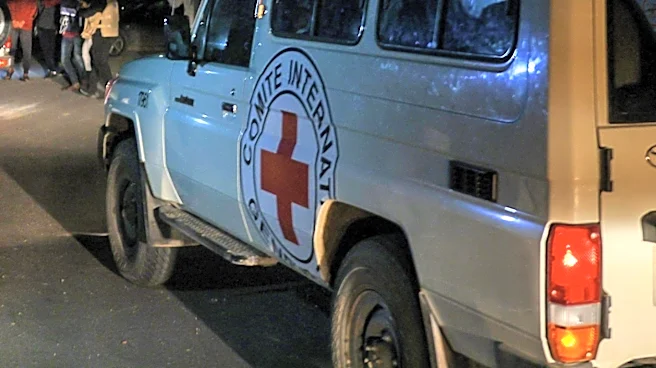
The International Committee of the Red Cross (ICRC) has issued practical, nonbinding guidance aimed at strengthening civilian protection in armed conflicts. This initiative comes as the ICRC warns of a growing disregard for international humanitarian
law (IHL), which is exacerbating suffering in over 130 armed conflicts worldwide. The recommendations, developed after two years of consultations with more than 160 states, were released ahead of the Global International Humanitarian Law Dialogue in Geneva on November 3-4. ICRC President Mirjana Spoljaric emphasized the urgent need for political will to prioritize and uphold IHL in military decisions. The guidance addresses issues such as countering narratives that dehumanize individuals or groups, monitoring social media use by armed forces, and integrating humanitarian values into civic education.
Why It's Important?
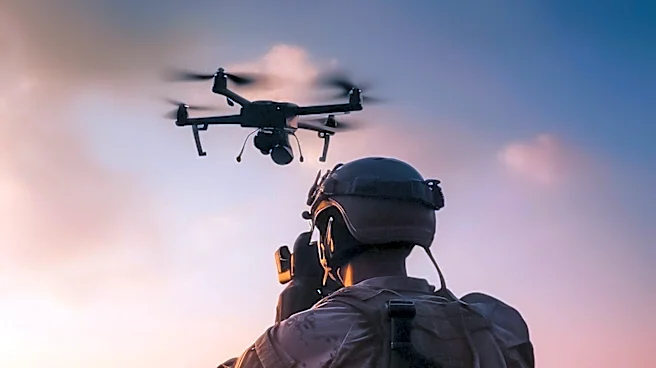
This guidance is critical because it provides a roadmap for governments and armed forces to mitigate the devastating impact of modern warfare on civilians. The ICRC's observation that warring parties are adopting overly permissive interpretations of IHL highlights a dangerous trend that undermines the foundational principles of humanitarian protection. By focusing on practical measures, such as establishing protected zones around essential infrastructure like hospitals, water systems, and communication services, the ICRC aims to ensure that basic necessities for survival are maintained during conflicts. The recommendations also address the risks posed by new technologies in warfare, including the need for continuous review of targeting information and regulating personal digital devices to prevent abuses like sexual violence and child recruitment. The involvement of over 160 states in the consultation process underscores the global recognition of this urgent humanitarian crisis.
What's Next?
The Global International Humanitarian Law Dialogue in Geneva, co-hosted by Switzerland and the ICRC, served as a platform for states, civil society, and other stakeholders to discuss the outcomes of these consultations. This dialogue will be followed by a high-level conference on December 7 in Jordan, hosted by King Abdullah II. Leaders from the 127 states that have officially joined the Global IHL Initiative will be invited to demonstrate their political commitment to upholding international humanitarian law. The success of these initiatives will depend on the willingness of governments and military leaders to translate these nonbinding recommendations into concrete actions and policies. The ICRC's ongoing efforts will focus on encouraging states to integrate these guidelines into their military doctrines and operational practices, thereby improving the protection of millions of people affected by armed conflicts.
Beyond the Headlines
The ICRC's guidance touches upon deeper societal and ethical implications of modern conflict, particularly the role of language and perception in dehumanizing adversaries. By recommending measures to counter narratives that portray certain groups as 'less deserving' of protection, the ICRC highlights how rhetoric can pave the way for atrocities. This aspect of the guidance suggests a proactive approach to preventing violations of IHL by addressing the psychological and cultural underpinnings of conflict. Furthermore, the focus on protecting essential infrastructure and regulating digital devices in operational settings reflects the evolving nature of warfare, where civilian life is increasingly intertwined with technological systems and information environments. The long-term impact could be a shift towards more ethically conscious military operations and a greater emphasis on humanitarian considerations in strategic planning, potentially fostering a more humane approach to armed conflict globally.