





What's Happening?
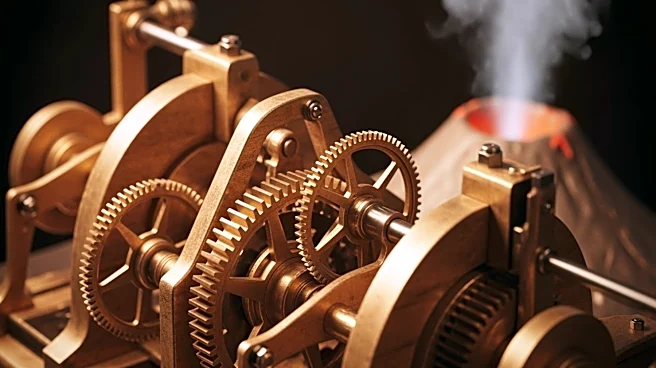
A mechanical artwork designed in 1775 to simulate the eruption of Mount Vesuvius has been brought to life by engineering students at the University of Melbourne. Originally conceived by Sir William Hamilton, a British ambassador with a keen interest in volcanology,
the device was intended to mimic the dramatic effects of a volcanic eruption using light and movement. The modern recreation was based on a detailed sketch preserved in the Bordeaux Municipal Library. Students Xinyu Xu and Yuji Zeng utilized modern materials and technologies, such as laser-cut timber, programmable LED lighting, and electronic control systems, to adapt Hamilton's design. The project, led by Dr. Richard Gillespie, serves as a piece of science communication, highlighting the power of volcanoes. The completed device is now featured in The Grand Tour exhibition at the University's Baillieu Library.
Why It's Important?
The revival of this historical device underscores the intersection of art, history, and modern engineering. It provides a unique educational opportunity for students to apply their skills in a practical setting, enhancing their understanding of mechanical engineering and problem-solving. The project also serves as a reminder of the enduring fascination with natural phenomena like volcanic eruptions and the role of technology in bringing historical concepts to life. This initiative not only enriches the students' educational experience but also contributes to public engagement with science and history through exhibitions.
What's Next?
The mechanical volcano will remain on display at The Grand Tour exhibition until June 28, 2026, allowing visitors to experience this blend of historical and modern engineering. The project may inspire further educational initiatives that combine historical research with modern technology, potentially leading to more collaborations between universities and cultural institutions. The success of this project could also encourage other educational institutions to explore similar interdisciplinary projects, fostering a deeper appreciation for the history of science and technology.