

What's Happening?
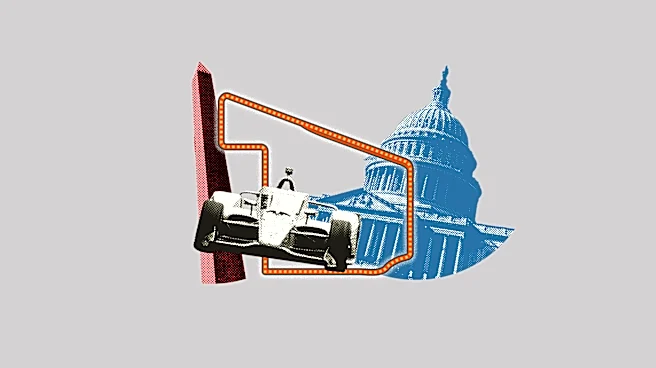
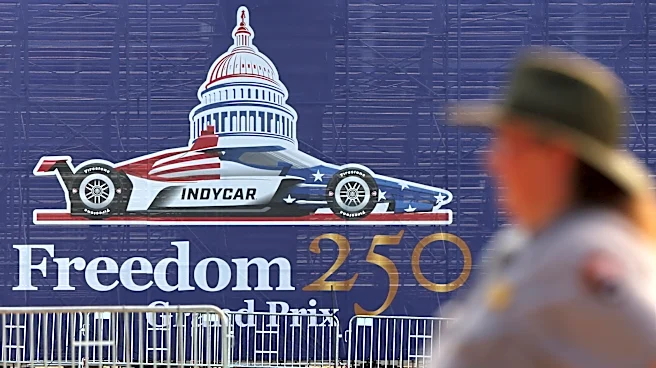
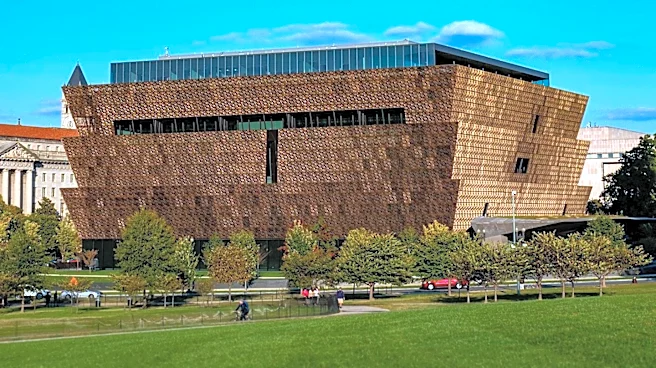
President Trump is orchestrating the 'Freedom 250 Grand Prix,' an Indy Car race set to take place on the National Mall in Washington D.C. Photos of the preparations reveal grandstands, finish lines, and various signage being erected around the iconic
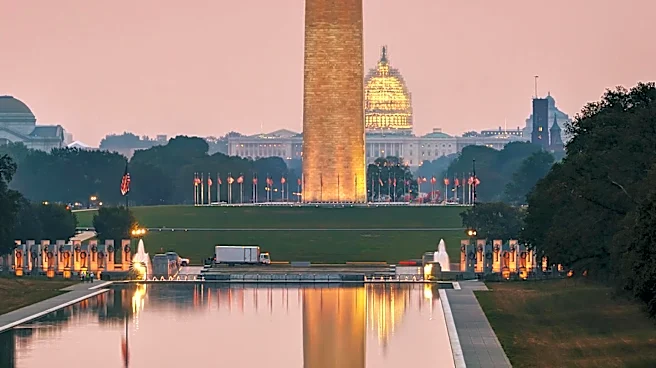
area. This event, intended to celebrate the 250th anniversary of the Declaration of Independence, is transforming the typically serene National Mall into a race track. The roads surrounding the Mall, usually bustling with tourists visiting national landmarks and museums, are now closed off, with construction workers and barriers dominating the landscape. This marks the first time an auto race will be held in the nation's capital, a decision that has drawn attention due to its unusual nature for the historic site.
Why It's Important?
The decision to host an Indy Car race on the National Mall carries significant implications for the preservation and public perception of national landmarks. The National Mall is a revered public space, symbolic of American democracy and history, and typically reserved for national celebrations, protests, and quiet reflection. Transforming it into a commercial racing venue raises questions about the appropriate use of such a significant site. This event could set a precedent for future commercial or entertainment uses of national parks and monuments, potentially altering their character and accessibility. Furthermore, concerns about potential damage to the historic grounds and infrastructure, as well as the environmental impact of a large-scale auto race in a sensitive urban environment, are prominent. The event also highlights the ongoing debate about the balance between national celebrations and the protection of public spaces.
What's Next?
The 'Freedom 250 Grand Prix' is scheduled to proceed, with the National Mall fully converted into a race track. Following the event, there will likely be assessments of any damage to the grounds and infrastructure, as well as a review of the overall impact of hosting such a large-scale commercial event in a national park. Public and political reactions to the race, both during and after, will be closely monitored. This event could spark further discussions and potential policy changes regarding the use of national landmarks for commercial or entertainment purposes. Stakeholders, including preservation groups, environmental organizations, and local residents, are expected to voice their opinions, potentially influencing future decisions about similar events in Washington D.C. and other national sites.
Beyond the Headlines
The 'Freedom 250 Grand Prix' on the National Mall delves into deeper questions about the commodification of public spaces and the evolving interpretation of national heritage. It challenges traditional notions of how national symbols and historical sites should be utilized, potentially blurring the lines between civic commemoration and commercial entertainment. Ethically, it raises concerns about the potential for commercial interests to overshadow the historical and cultural significance of such a revered location. The event also highlights a broader trend of utilizing public spaces for large-scale spectacles, which can lead to debates about accessibility, environmental impact, and the long-term preservation of these areas. This development could trigger a re-evaluation of policies governing national parks and monuments, potentially leading to stricter guidelines or, conversely, opening doors for more diverse uses in the future, thereby reshaping the cultural landscape of national celebrations.