




What's Happening?
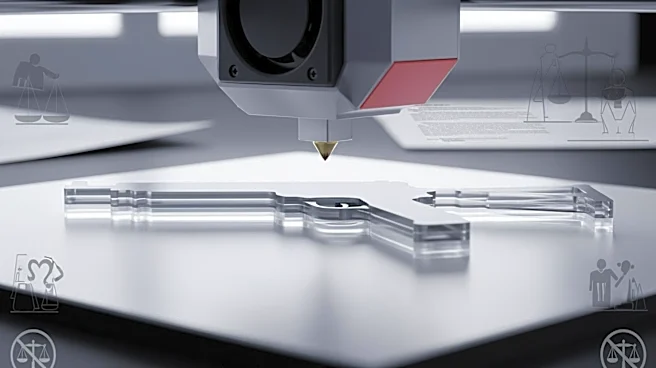
Several states, including Washington, Colorado, New York, and California, are introducing legislation aimed at regulating the production of 'ghost' guns using 3D printers. These firearms and parts are untraceable due to the lack of serial numbers, raising
significant concerns about their potential use in criminal activities. The proposed bills seek to impose restrictions on 3D printing technology, such as requiring software that can detect and prevent the printing of illegal items and mandating background checks for 3D printer purchases. However, the technology to enforce these measures does not currently exist, leading to debates about the feasibility and effectiveness of such regulations. The legislation has sparked discussions among lawmakers, legal experts, and the maker community, who are concerned about the implications for personal freedoms and innovation.
Why It's Important?
The introduction of these bills highlights the growing concern over the use of 3D printing technology to produce untraceable firearms, which poses a significant challenge to law enforcement and public safety. If enacted, these laws could set a precedent for how emerging technologies are regulated, balancing innovation with security. The maker community, which includes hobbyists and professionals who use 3D printers for various purposes, may face increased scrutiny and restrictions, potentially stifling creativity and technological advancement. Additionally, the requirement for background checks could impact the accessibility of 3D printers, affecting industries that rely on this technology for prototyping and manufacturing.
What's Next?
As these bills progress through state legislatures, stakeholders from various sectors, including technology, law enforcement, and civil liberties groups, are likely to engage in discussions to shape the final form of the legislation. The outcome could influence federal policy on 3D printing and gun control, prompting further debate on the balance between innovation and regulation. The maker community is encouraged to participate in surveys and discussions to voice their opinions and concerns, which could impact the legislative process. The ongoing dialogue will be crucial in determining how to effectively address the challenges posed by 3D-printed ghost guns while preserving the benefits of 3D printing technology.