



What's Happening?
The historic ocean liner SS United States is scheduled to be intentionally sunk this Thursday off the coast of Destin, Florida, to create the world's largest artificial reef. Alex Fogg, the natural resources chief for Okaloosa County, Florida, confirmed
the plan, highlighting the ship's immense size and storied past. Built in the early 1950s, the SS United States served as a transatlantic passenger vessel and was designed for potential use as a troop carrier. After being retired in the late 1960s, it sat for decades in Philadelphia before being towed to Mobile, Alabama, for remediation. The decision to sink the ship comes after a lack of viable plans or funding to restore it as a museum or for other purposes. Okaloosa County views this as a way to 'save' the ship by giving it a new life that benefits both tourism and the marine environment.
Why It's Important?
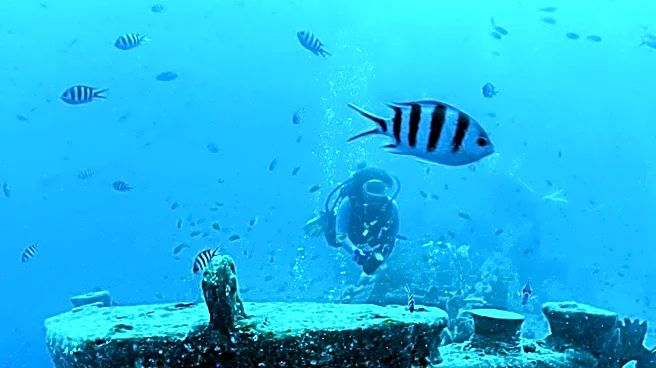
The sinking of the SS United States represents a significant development for marine conservation and tourism in the Gulf of Mexico. Artificial reefs are known to enhance marine biodiversity by providing habitat for various species and attracting divers, thereby boosting local economies. For Okaloosa County, this project aims to solidify its reputation as a premier dive destination. However, the plan has faced opposition, with a nonprofit conservation group filing a lawsuit to prevent the sinking, citing concerns about environmental impact and potential harm to marine organisms and the food web. This highlights the ongoing tension between economic development through tourism and environmental protection, particularly when dealing with large-scale interventions in marine ecosystems.
What's Next?
The planned sinking of the SS United States is set for this Thursday, weather permitting. The lawsuit filed by the conservation group could potentially delay or halt the operation, depending on court rulings. If the sinking proceeds, environmental monitoring will be crucial to assess the long-term impact on the marine ecosystem. Okaloosa County will likely continue to promote the site as a major diving attraction, expecting an increase in tourism. The success of this project could also influence future decisions regarding other decommissioned vessels, potentially leading to more artificial reef initiatives. The debate between preserving historical artifacts and utilizing them for environmental and economic benefits will likely continue.
Beyond the Headlines
The transformation of the SS United States from a symbol of American maritime prowess to an artificial reef raises profound questions about heritage, utility, and environmental stewardship. The ship's dual identity as a luxury liner and a potential military asset reflects a bygone era of engineering and national ambition. Its new role as an underwater habitat symbolizes a shift in values, prioritizing ecological benefit and sustainable tourism over traditional preservation. This decision also underscores the economic realities of maintaining large historical artifacts; without viable funding for restoration, repurposing them for environmental benefit becomes a pragmatic, albeit controversial, alternative. The controversy surrounding the sinking highlights the emotional attachment many have to historical objects and the complex ethical considerations involved in their ultimate fate.