





What's Happening?
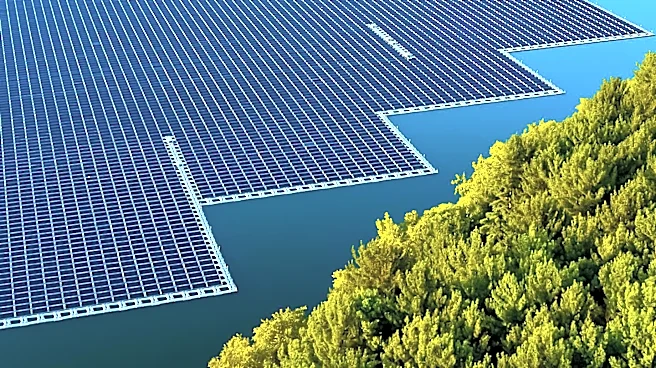
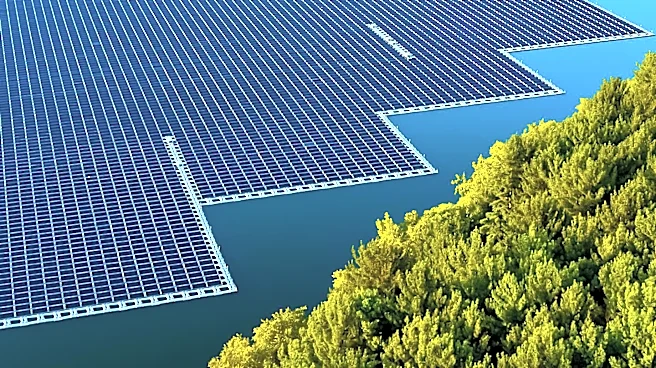
The Arkansas Agricultural Experiment Station has installed a 70-kilowatt, 96-panel floating solar array on an irrigation reservoir at its Rice Research and Extension Center in Stuttgart, Arkansas. An additional 24 panels were placed on the reservoir embankment.
This pilot project covers approximately 0.1 acre of a 40-acre reservoir. The initiative aims to generate electricity without using agricultural land, reduce water loss from evaporation, and assess the economic viability of such systems in Arkansas. Michael Popp, an agricultural economist leading the project, emphasizes the goal of creating synergy between utility companies, solar investors, farmers, and policymakers. The project is funded by Popp’s endowed chair and the Division of Agriculture, focusing on data collection regarding operational costs, water impact, and maintenance.
Why It's Important?
This project is significant for U.S. agriculture and renewable energy, particularly in regions with extensive irrigation. Floating solar arrays offer a solution to the land-use conflict between solar development and farming, as they utilize existing water bodies rather than converting valuable cropland. The expected 25-50% reduction in evaporation could be crucial for water-stressed farming areas, directly impacting water bills and ensuring water availability for crops like rice. Economically, it presents a potential new revenue stream for farmers with irrigation ponds, without sacrificing planted acreage. The project also highlights the potential for increased energy independence and sustainability within the agricultural sector, offering a model for other states facing similar challenges in balancing food production and energy needs.
What's Next?
The immediate next step involves monitoring the array's performance and collecting data on its operational costs, impact on water evaporation, and maintenance requirements. A key aspect of the research will be observing the reactions of migratory birds, particularly mallards, which winter in large numbers in Stuttgart. Researchers will assess how these birds interact with the floating panels, as their response could significantly influence the broader adoption of such technology. The team also conducted a survey of Mid-South households and farmers to gauge public opinion on solar development on farmland, with those results expected to inform future policy and adoption strategies. The first major test will occur during the fall migration when hundreds of thousands of birds arrive.
Beyond the Headlines
Beyond the immediate technical and economic implications, this project delves into the complex interplay between agriculture, environmental conservation, and renewable energy. The unique challenge of assessing the impact on migratory waterfowl introduces an ecological dimension that could shape future regulations and public acceptance of floating solar technology. If successful, this model could lead to a paradigm shift in how agricultural land is utilized, promoting a more integrated approach to resource management. It also raises questions about the aesthetic integration of such infrastructure in rural landscapes and the potential for unexpected ecological benefits or drawbacks, such as changes in aquatic ecosystems due to shading. The project's success could influence policy decisions regarding land classification and incentives for sustainable farming practices across the U.S.