
What's Happening?
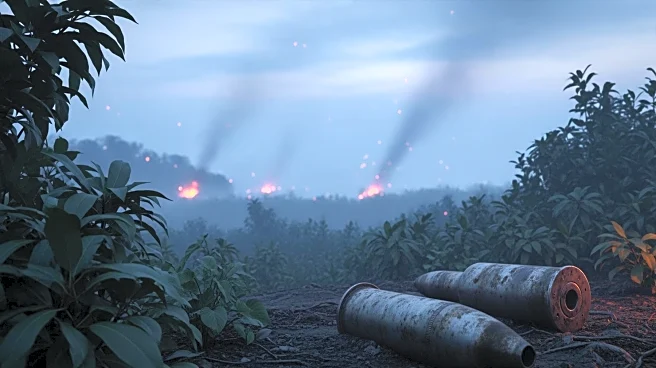
On December 9, renewed fighting between Thailand and Cambodia escalated as both countries accused each other of launching artillery and loitering munition strikes. The Royal Thai Army reported that Cambodian
forces targeted civilian areas using loitering munitions and multiple rocket launchers. In contrast, Cambodia's Ministry of National Defence accused Thailand of deploying reconnaissance UAVs and artillery against Cambodian infrastructure. The conflict has spread to various locations along the border, including districts in Cambodia's Battambang province and areas near the Preah Vihear temple. Both sides have expanded their military operations, raising concerns about further escalation.
Why It's Important?
The intensification of the Thailand-Cambodia border conflict highlights the fragile nature of peace in the region. The use of heavy weaponry and the targeting of civilian areas could lead to significant humanitarian consequences, including displacement and casualties. The conflict threatens regional security and could disrupt economic activities, particularly in border areas. It also poses a challenge to international diplomatic efforts aimed at maintaining peace and stability in Southeast Asia. The situation underscores the need for effective conflict resolution mechanisms to prevent further deterioration of relations between the two countries.
What's Next?
The ongoing conflict may prompt calls for international mediation to de-escalate tensions. Regional organizations and neighboring countries could play a role in facilitating dialogue between Thailand and Cambodia. Both nations may also seek to strengthen their military presence along the border, potentially leading to an arms buildup. The international community will likely monitor the situation closely, with potential diplomatic interventions to prevent a broader conflict. The resolution of this conflict will require careful negotiation and compromise from both sides.