




What's Happening?
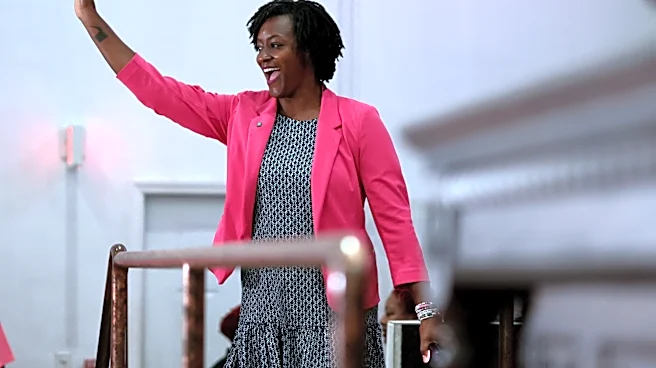
Florida's 2nd Congressional District is experiencing a highly competitive primary race following the retirement of Republican U.S. Representative Neal Dunn, who has served the district for 10 years. The Democratic primary saw Amanda Marie Green emerge
victorious from a crowded four-candidate field, securing 33% of the vote. Green, who previously worked in foreign aid, cited President Trump's actions regarding the U.S. Agency for International Development as a motivator for her candidacy. She has garnered endorsements from Tallahassee-area Democratic state Representatives Gallop Franklin and Allison Tant, as well as the AFL-CIO and former U.S. Representative Allen Boyd. On the Republican side, lawyer Austin Rogers won his primary against seven other candidates. Rogers previously served as General Counsel to U.S. Senator Rick Scott. The upcoming general election will determine who succeeds Dunn, whose retirement is attributed to health reasons.
Why It's Important?
This election is significant for both national and state politics, as Democrats view it as their best opportunity in a decade to flip the seat. The district, largely rural and stretching from DeFuniak Springs to the Suwannee River, has historically leaned Republican, with President Trump winning 58% of the votes in 2024. However, the open seat due to Representative Dunn's retirement, combined with what Democrats perceive as a favorable national political climate, has energized their efforts. The outcome will impact the balance of power in the U.S. House of Representatives. While the Democratic Congressional Campaign Committee has invested resources in other Florida battleground districts, their interest in CD 2 has not yet been explicitly shown, indicating a potentially challenging but not impossible path for Green. The race will test the ability of Democratic candidates to appeal to voters in a traditionally conservative area.
What's Next?
Amanda Marie Green, the Democratic primary winner, will now face Republican primary winner Austin Rogers in the general election. The campaign is expected to intensify as both candidates work to consolidate support and appeal to independent voters. Green's endorsements from state-level Democratic leaders and labor organizations will be crucial in mobilizing her base, while Rogers will likely leverage his experience as General Counsel to U.S. Senator Rick Scott and the district's Republican leanings. The Democratic Congressional Campaign Committee's potential future involvement or lack thereof will also be a key factor in the resources available to Green's campaign. The election in November will ultimately decide who represents Florida's 2nd Congressional District, succeeding the retiring Representative Neal Dunn.
Beyond the Headlines
The contest in Florida's 2nd Congressional District highlights broader trends in U.S. electoral politics, particularly the ongoing struggle for control of the House of Representatives. The district's demographic and political composition, being largely rural and conservative, makes a Democratic victory a significant indicator of shifting political tides or effective grassroots organizing. Green's motivation, stemming from her concerns about the U.S. Agency for International Development under President Trump, reflects a broader ideological divide that is shaping many congressional races. The race also underscores the importance of local endorsements and the role of state-level political figures in national elections. The outcome could provide insights into the effectiveness of different campaign strategies in challenging districts and the potential for 'flip' opportunities in the current political landscape.