






What's Happening?
European leaders are increasingly coordinating on defense, tariffs, and foreign policy in response to various global challenges, including wars in Ukraine and Iran, a growing trade deficit with China, and threats from Russia. This unity is partly a reaction
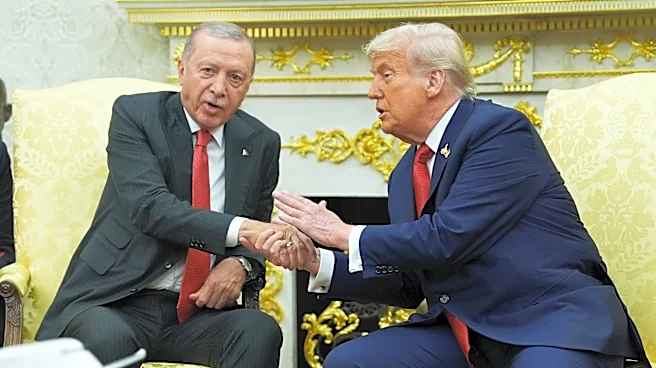
to President Trump's individualistic approach to negotiations with European countries. Trump's recent criticisms of Italian Prime Minister Giorgia Meloni have inadvertently strengthened her ties with other European leaders, who have rallied around her. This has helped thaw previously frosty relations due to her party's hard-right roots. The situation highlights a broader trend of European countries acting as a bloc to maintain their global standing amidst pressures from both China and the U.S.
Why It's Important?
The growing unity among European leaders signifies a shift in international relations, where Europe is increasingly acting as a cohesive entity to counterbalance the influence of major powers like the U.S. and China. This development could impact U.S. foreign policy, as it reduces President Trump's ability to negotiate with European countries on a bilateral basis. The strengthened European alliance may also influence global economic and security policies, potentially leading to more coordinated actions against common threats. For the U.S., this could mean a need to adjust its diplomatic strategies and consider the implications of a more unified European stance on issues like trade and military alliances.
What's Next?
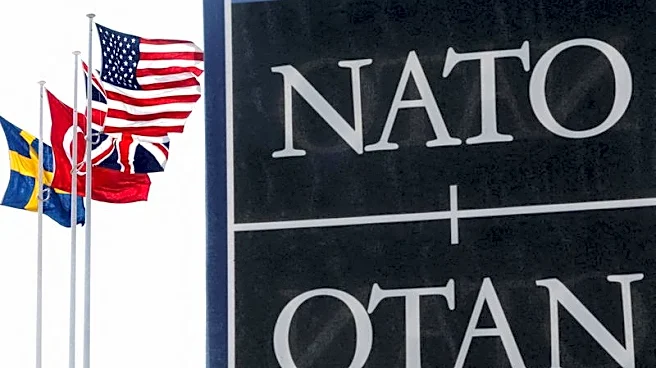
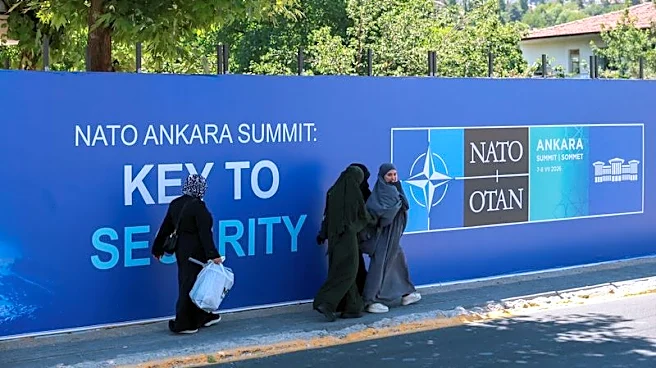
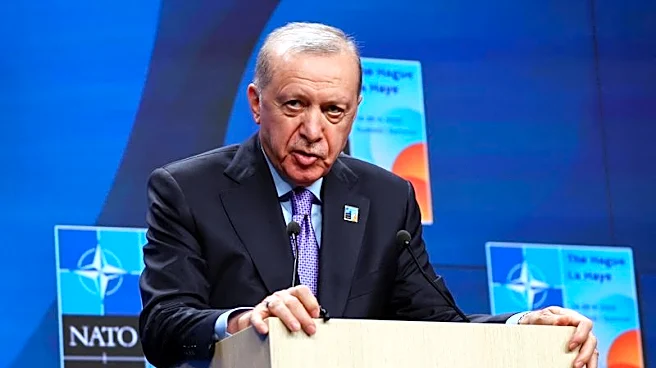
The newfound European unity will likely be tested at upcoming international summits, such as the NATO meeting in Turkey. European leaders will need to navigate their internal differences while presenting a united front on key issues. The political landscape in Europe may also shift as nationalist parties, once aligned with Trump, recalibrate their positions due to the unpopularity of his policies among European voters. This could lead to changes in domestic politics across Europe, affecting future elections and policy decisions. The U.S. may need to reassess its approach to Europe, considering the potential for a more assertive and coordinated European Union.
Beyond the Headlines
The situation underscores the complex dynamics of international alliances and the unintended consequences of political rhetoric. President Trump's criticisms have inadvertently strengthened European unity, highlighting the interconnectedness of global politics. This development also raises questions about the role of nationalism in international relations and the balance between domestic and foreign policy priorities. As Europe seeks to assert its place on the global stage, the U.S. may face challenges in maintaining its influence and fostering cooperation on shared global issues.