


What's Happening?
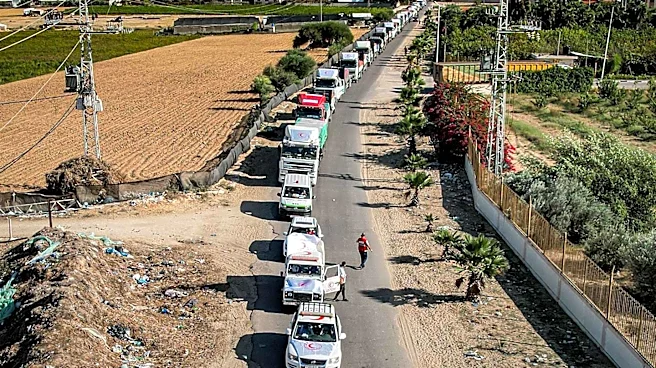
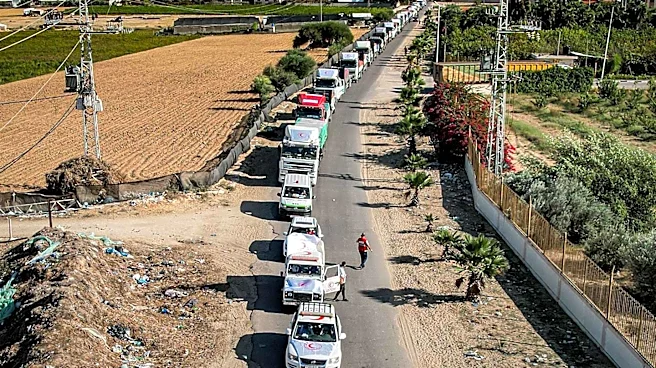
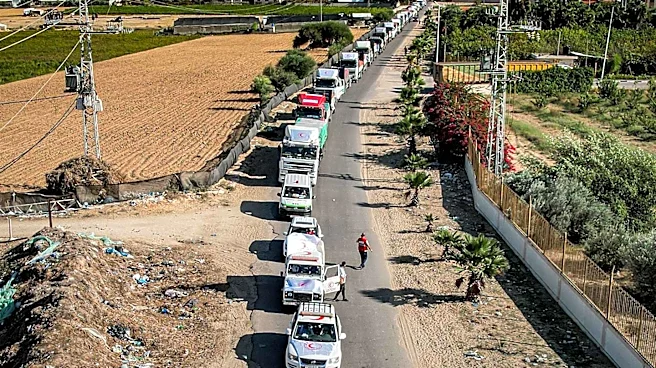
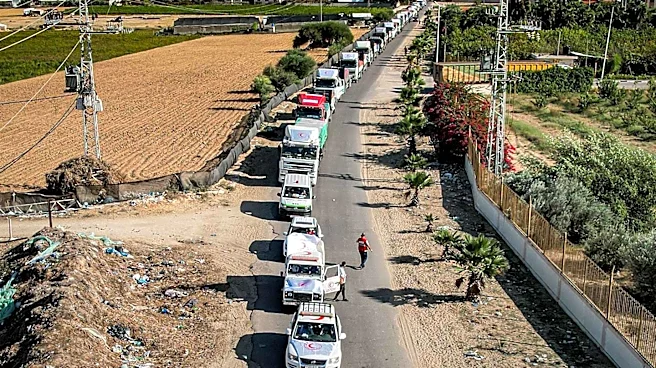
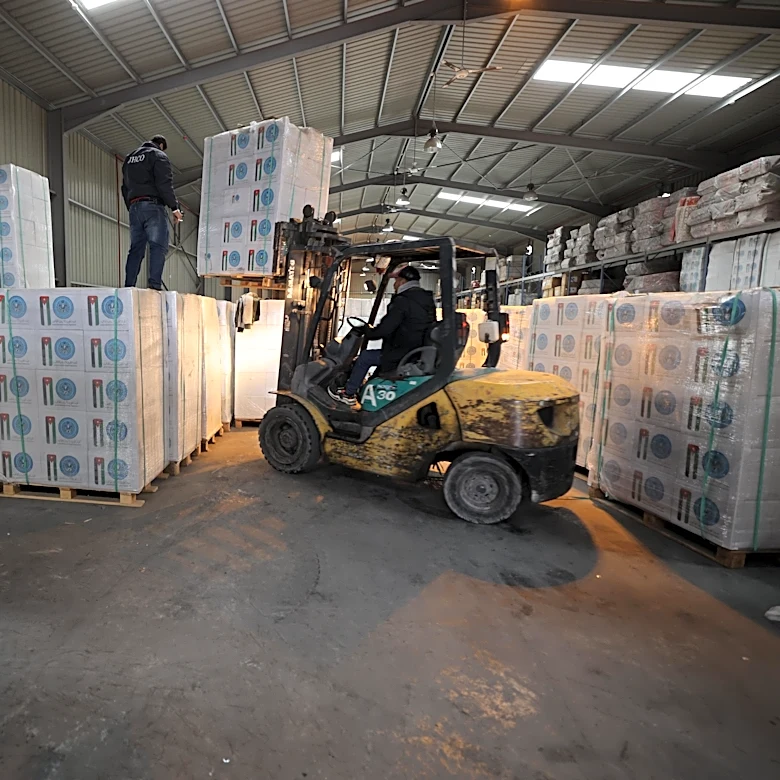
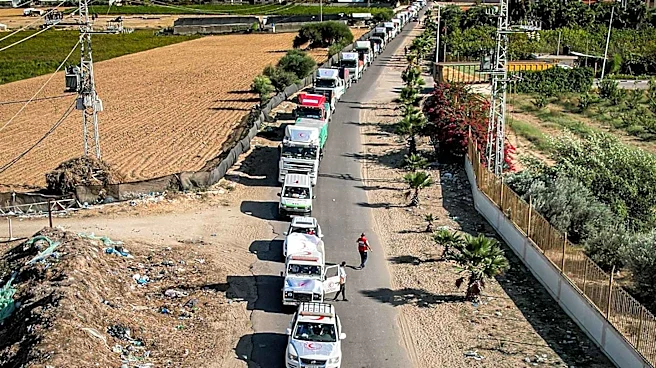
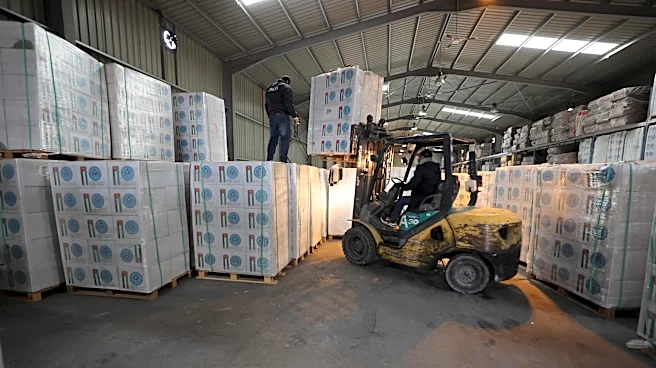
The foreign ministers of Australia, Canada, Italy, and the United Kingdom have issued a joint statement urging Israel to allow immediate and unimpeded humanitarian access throughout Gaza. They highlighted the dire humanitarian situation, noting that 150,000
tents and other vital supplies are being held at the border and prevented from entering Gaza. This appeal comes as heavy rains have swept away tens of thousands of tents, leaving many displaced Palestinians without shelter ahead of winter. The countries emphasized that the situation is reversible and there is still time to act. For years, Israel has restricted entry and exports into Gaza, and since October 2023, it has imposed a full-scale blockade, limiting access to essential supplies. The United Nations Office for the Coordination of Humanitarian Affairs estimates that 1.4 million Palestinians, or 65% of Gaza's population, live in tents or makeshift shelters, with humanitarian shelter stocks virtually exhausted.
Why It's Important?
This joint appeal from four significant international actors underscores the escalating humanitarian crisis in Gaza and the growing international concern over Israel's restrictions on aid. The inability to deliver essential supplies, particularly shelter, ahead of winter, poses a severe threat to the lives and well-being of over a million displaced Palestinians. The statement highlights a critical point of contention in the ongoing conflict: the balance between Israel's security concerns and its obligations under international humanitarian law to facilitate aid. Denying civilians access to humanitarian aid can constitute a war crime, making this issue a matter of significant legal and ethical importance. The collective call from these nations reflects a broader international consensus that the humanitarian situation in Gaza is unsustainable and requires immediate action, placing increased diplomatic pressure on Israel.
What's Next?
The joint statement is likely to intensify international pressure on Israel to ease its blockade and allow more humanitarian aid into Gaza. While Israel has stated it restricts certain materials over concerns that Hamas could use them for military purposes, the international community is urging a more flexible approach to prevent further civilian suffering. The upcoming winter months will likely exacerbate the crisis, leading to more urgent calls for action. The United Nations and other humanitarian organizations will continue to advocate for increased access and resources. The situation could also lead to further diplomatic engagements, potentially involving other nations or international bodies, to negotiate humanitarian corridors and ensure the delivery of aid. The ongoing international legal proceedings against Israeli officials for alleged war crimes may also be influenced by the continued humanitarian crisis.
Beyond the Headlines
The humanitarian crisis in Gaza, exacerbated by the blockade and recent weather events, reveals the profound human cost of prolonged conflict and political deadlock. The struggle to deliver basic necessities like shelter and food highlights the complex interplay between security concerns, international law, and humanitarian imperatives. The international community's repeated calls for aid access, while crucial, also expose the limitations of diplomatic influence when faced with entrenched geopolitical realities. This situation could lead to a re-evaluation of international aid mechanisms in conflict zones and the development of more robust frameworks for ensuring humanitarian access. Furthermore, the plight of displaced Palestinians in Gaza serves as a stark reminder of the long-term consequences of unresolved conflicts on civilian populations, fostering a cycle of dependency and vulnerability that can have lasting societal impacts.