






What's Happening?
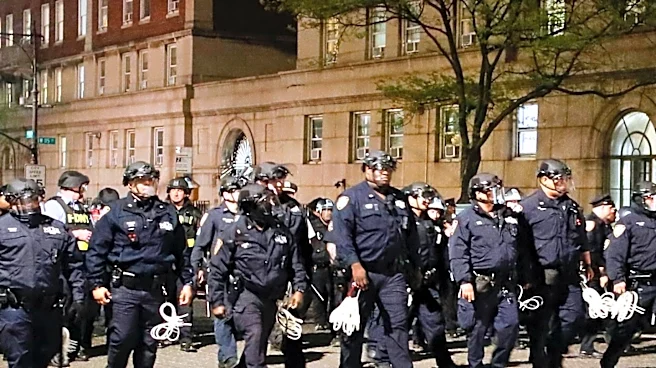
A study co-authored by University at Buffalo researchers indicates that the COVID-19 pandemic exacerbated existing racial disparities in policing, particularly in suburban areas. Focusing on Irondequoit, a suburb of Rochester, New York, the research team
analyzed arrest data from 2018 to 2023. Initially, arrests saw a general decline during the early stages of the pandemic compared to the two preceding years. However, by 2021, there was a notable increase in arrests for alleged nonviolent crimes, disproportionately affecting Black individuals. The study also found a decrease in violent crime through 2020, with no significant increase thereafter. Both men and women experienced an rise in arrests post-pandemic onset, with men showing a rate of approximately 37 arrests per 1,000 individuals by 2023, and women nearly seven arrests per 1,000 individuals. Christopher Dennison, Ph.D., an associate professor of sociology and criminology at the UB College of Arts and Sciences and a co-author, noted that many well-documented patterns in arrests intensified during this period. The study, led by O. Nicholas Robertson, Ph.D., from the Rochester Institute of Technology, highlights the need for further examination of policing patterns in smaller communities.
Why It's Important?
This research is important because it sheds light on how a public health crisis like the pandemic can have profound and unequal impacts on social systems, specifically policing and racial justice in the U.S. The finding that racial disparities in arrests for nonviolent crimes intensified in a suburban setting challenges the common focus on major cities for such studies, suggesting that systemic inequalities are pervasive across different community types. The increase in arrests for nonviolent crimes among Black individuals in 2021, following an initial decline, indicates a potential shift in policing priorities or enforcement patterns that disproportionately affected certain demographic groups. This has significant implications for community trust, individual well-being, and the ongoing national discourse on police reform and racial equity. Understanding these dynamics is crucial for developing more equitable public safety strategies and addressing the root causes of systemic disparities, especially in times of societal upheaval.
What's Next?
The study's findings, which are forthcoming in the American Journal of Criminal Justice, are expected to prompt further research into how societal upheavals influence policing patterns in diverse communities. Christopher Dennison emphasized the need for additional studies focusing on smaller towns rather than just large cities to gain a comprehensive understanding of these dynamics. This suggests that future investigations may explore similar trends in other suburban or rural areas across the U.S. The researchers also highlighted that their findings, while not generalizable to all communities, provide sufficient initial evidence to warrant broader consideration. This could lead to policy discussions at local and state levels regarding police training, resource allocation, and community engagement strategies aimed at mitigating racial disparities in arrests, particularly for nonviolent offenses. The focus will likely shift towards understanding response strategies during major crises to prevent the deepening of existing inequalities.
Beyond the Headlines
Beyond the immediate findings, this study underscores a deeper societal issue: how crises can expose and exacerbate underlying systemic inequalities. The pandemic, while a public health emergency, acted as a catalyst, revealing vulnerabilities within the policing system that led to disproportionate impacts on Black individuals. This raises ethical questions about the role of law enforcement during times of crisis and whether existing protocols adequately protect all segments of the population. The emphasis on arrests, rather than convictions, highlights the argument that harm can begin long before a legal judgment, affecting individuals' lives, reputations, and access to opportunities. This research contributes to the ongoing conversation about the need for a holistic approach to public safety that considers social determinants and aims to prevent harm rather than solely reacting to it. It also challenges the conventional wisdom that suburban areas are immune to the racial disparities often associated with urban policing.