





What's Happening?
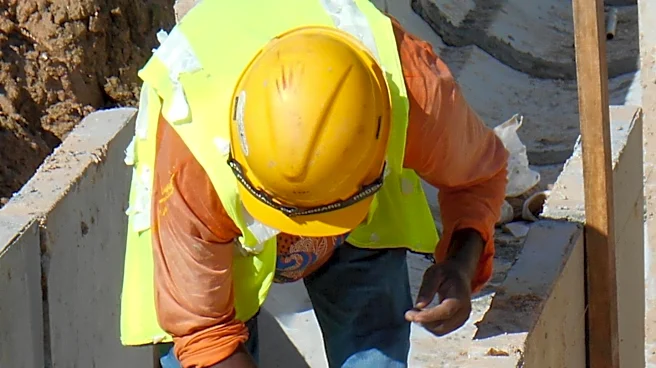
Staff members of U.S. Senator Deb Fischer recently visited the Lincoln Airport Authority to assess the ongoing progress of the RWY 1836 project. The visit provided an opportunity to observe the scale and development of the 12,901-foot runway project. This
inspection highlights the continued oversight and engagement of Senator Fischer's office with significant infrastructure developments within Nebraska. The project involves substantial construction, with the new concrete runway being a central feature. The visit underscores the importance of local infrastructure initiatives and the role of federal representatives in monitoring their execution and impact on the community.
Why It's Important?
The review of the RWY 1836 project by Senator Fischer's staff is important for several reasons. Firstly, it demonstrates accountability and transparency in the use of public funds for large-scale infrastructure. Federal oversight ensures that projects adhere to timelines and standards, which is crucial for taxpayer confidence. Secondly, the development of a 12,901-foot runway at Lincoln Airport can significantly enhance the airport's capacity and operational efficiency. This expansion could lead to increased air traffic, potentially boosting local commerce, tourism, and job creation in Nebraska. Improved airport infrastructure is vital for regional economic growth, facilitating better connectivity for businesses and residents. The project's magnitude suggests a long-term investment in the state's transportation network, positioning Lincoln as a more significant hub for air travel and cargo.
What's Next?
Following the staff's review, it is expected that Senator Fischer's office will continue to monitor the RWY 1836 project's progress, potentially providing further support or addressing any emerging challenges. The completion of such a large-scale runway project will likely lead to new operational capabilities for the Lincoln Airport Authority, which could include accommodating larger aircraft or increasing flight frequencies. This could, in turn, necessitate adjustments in airport management, staffing, and ancillary services. Local businesses and residents might anticipate new opportunities arising from enhanced air travel access. Future updates from the Lincoln Airport Authority will likely detail the project's milestones and its eventual impact on regional air transportation and economic activity.
Beyond the Headlines
Beyond the immediate operational improvements, the RWY 1836 project at Lincoln Airport could have broader implications for regional development and strategic infrastructure planning. A modernized and expanded runway system can serve as a critical asset for national logistics and emergency response, given its capacity to handle diverse aircraft types. This investment also reflects a commitment to maintaining robust transportation networks, which are essential for national security and economic resilience. The project's success could set a precedent for future infrastructure initiatives in Nebraska and other states, emphasizing the importance of collaboration between local authorities and federal representatives in driving significant public works. It also highlights the ongoing need for continuous investment in infrastructure to support evolving demands in air travel and cargo logistics.