







What's Happening?
The Department of Homeland Security (DHS) is facing a potential funding crisis as Congress has yet to pass the necessary appropriations. Emergency funds currently sustaining DHS operations are expected to run out by early next month, which could lead
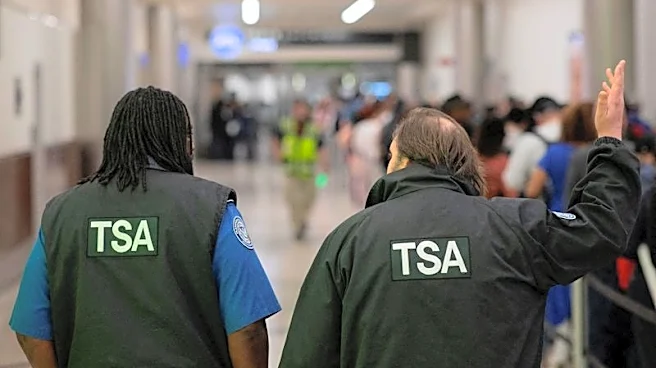
to significant disruptions, such as long lines at airports due to unpaid Transportation Security Administration (TSA) agents. The Senate has already passed a bipartisan bill to fund most of DHS, excluding Immigration and Customs Enforcement (ICE) and Customs and Border Protection (CBP) due to Democratic opposition. House Republicans are now working on a separate bill to fund these immigration operations, but the process is complicated by internal party disagreements and the need for a budget reconciliation process to bypass a Senate filibuster.
Why It's Important?
The funding impasse for DHS is critical as it affects national security and immigration enforcement, two highly contentious issues in U.S. politics. The inability to secure funding could lead to operational disruptions, impacting public safety and the economy, particularly in sectors reliant on efficient border and airport operations. The situation also highlights the deep partisan divides in Congress, with Republicans prioritizing immigration enforcement funding and Democrats opposing it. This standoff could have broader implications for upcoming elections, as both parties seek to leverage the issue to galvanize their bases.
What's Next?
The House is expected to vote on a budget resolution soon, which is a preliminary step towards passing the reconciliation bill needed to fund ICE and CBP. However, the process is fraught with potential delays as some Republicans seek to include additional priorities in the reconciliation process. The outcome of these negotiations will determine whether DHS can secure the necessary funding to continue its operations without interruption. The political stakes are high, with potential impacts on the midterm elections as both parties position themselves on immigration and national security issues.