
What's Happening?
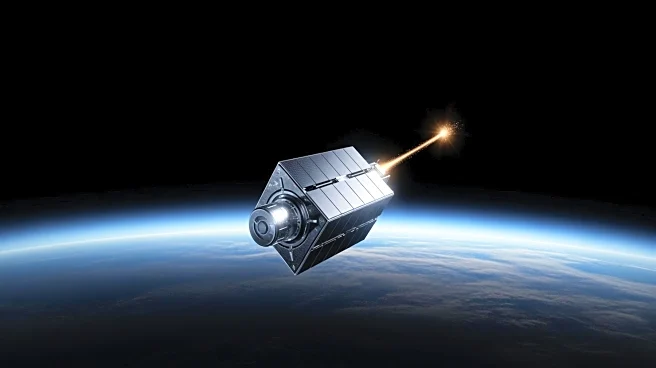
Spain's latest communications satellite, SpainSat NG-2, was struck by a 'space particle' while en route to its operational position in geostationary orbit. The satellite, launched on a SpaceX Falcon 9
rocket from Cape Canaveral, was part of a pair designed to enhance government communications in Europe. The incident occurred at an altitude of approximately 31,000 miles, higher than the typical geostationary orbit. Indra Group, the majority stakeholder of Hisdesat, which operates the satellite, is currently assessing the damage. A contingency plan has been implemented to ensure that the Ministry of Defense and other clients remain unaffected. If necessary, the satellite will be replaced.
Why It's Important?
The incident highlights the vulnerability of space assets to natural space phenomena, which can have significant implications for national security and communications infrastructure. The SpainSat NG-2 was a critical component of Spain's military communications, and its potential loss could impact secure communications capabilities. The situation underscores the importance of having contingency plans and the ability to quickly replace or repair damaged satellites. This event also raises awareness about the need for improved space debris tracking and mitigation strategies to protect valuable space assets.
What's Next?
The technical team is analyzing the available data to determine the extent of the damage. If the satellite is deemed irreparable, plans for its replacement will be expedited. The incident may prompt discussions on enhancing satellite protection measures and improving space traffic management to prevent similar occurrences in the future. Stakeholders, including the Spanish Ministry of Defense and Hisdesat, will likely be involved in these discussions to ensure the continuity of secure communications.