






What's Happening?
Chickamauga Lake is once again the center of a long-standing debate regarding the management of aquatic vegetation and the use of herbicides. During a public meeting hosted by the Tennessee Wildlife Resources Agency (TWRA) in Birchwood, anglers and other
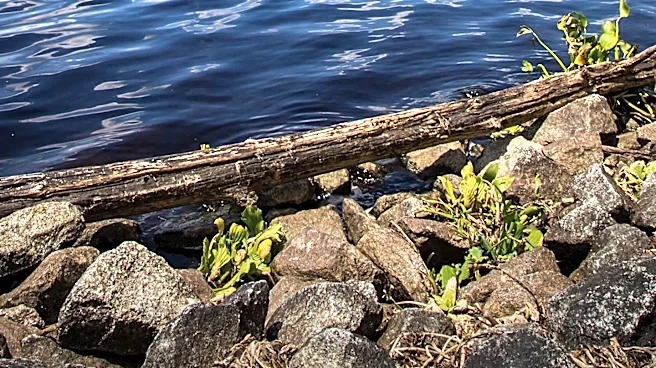
interested parties voiced concerns about what they perceive as excessive herbicide spraying. This issue has persisted for over 40 years, with fishermen advocating for the benefits of aquatic vegetation as fish habitat, while boaters and lakeshore landowners often view it as a nuisance that impedes navigation and aesthetics. Historically, the Tennessee Valley Authority (TVA) controlled vegetation, but current spraying is predominantly conducted by private companies hired by private landowners. The Tennessee Department of Agriculture (TDA) and the Tennessee Department of Environment and Conservation (TDEC) are the state agencies with regulatory authority over these practices.
Why It's Important?
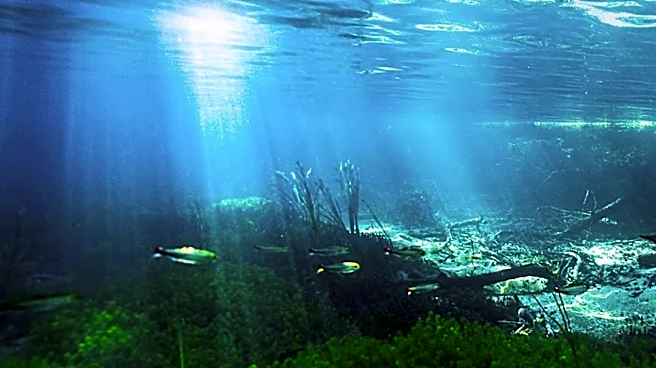
The ongoing conflict over aquatic vegetation management on Chickamauga Lake has significant ecological and economic implications. For anglers, particularly bass fishermen, dense aquatic vegetation provides crucial habitat for game fish, leading to improved fishing opportunities and supporting a thriving recreational fishing industry. Chickamauga Lake has become a highly-ranked 'destination lake' for serious bass anglers, partly due to the return of diverse aquatic vegetation species over the past 30 years. Conversely, excessive vegetation can hinder recreational boating, impact property values for lakeshore residents, and create navigation challenges. The use of herbicides, while addressing some concerns, raises questions about its long-term environmental impact on the lake's ecosystem and its fish populations. The balance between these competing interests is vital for the sustainable management of the lake's resources and its continued economic contribution through tourism and recreation.
What's Next?
The Tennessee Wildlife Resources Agency (TWRA) is currently developing its Tennessee Black Bass Management Plan (2027-2036), which will be finalized by the Tennessee Fish and Wildlife Commission (TFWC) in October. While TWRA acknowledges the importance of aquatic vegetation, it has limited direct authority over herbicide use, which falls under the purview of the Tennessee Department of Agriculture (TDA) and the Tennessee Department of Environment and Conservation (TDEC). Anglers are urging TWRA to 'back them up' in their protests against excessive spraying. Additionally, TWRA plans to increase its review and monitoring of bass fishing tournaments, aiming to create a free registration platform by 2028 to collect data and share tournament information, and to compile an annual report on bass tournaments. This initiative seeks to understand the impact of tournament pressure on bass populations.
Beyond the Headlines
This decades-long dispute on Chickamauga Lake highlights the complex challenges of managing shared natural resources where diverse stakeholders have conflicting interests. The shift in responsibility for vegetation control from public entities like TVA to private landowners and contractors, coupled with relaxed regulations by TDEC around 2012, complicates oversight and public notification. This situation underscores the need for comprehensive, integrated management strategies that consider both ecological health and human uses. The call for TWRA to advocate for anglers, despite its limited regulatory power over herbicides, points to the broader role of state agencies in representing stakeholder interests and influencing policy. The battle over Chickamauga Lake serves as a microcosm of environmental governance issues, where scientific understanding, economic pressures, and community values constantly intersect.