





What's Happening?
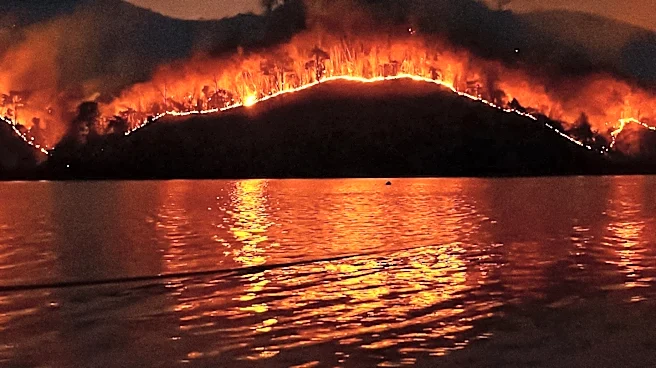
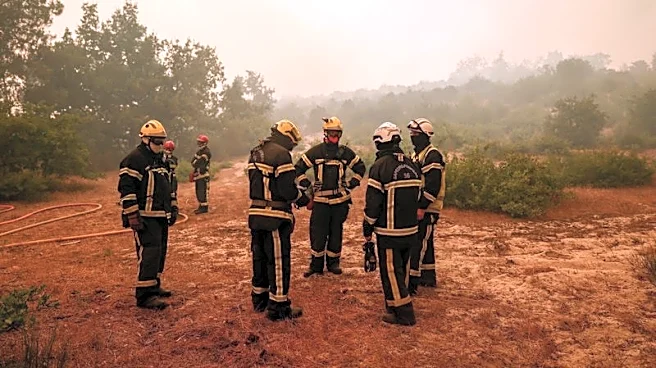
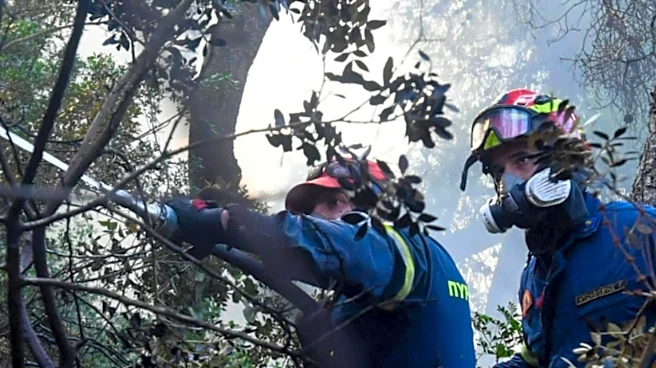
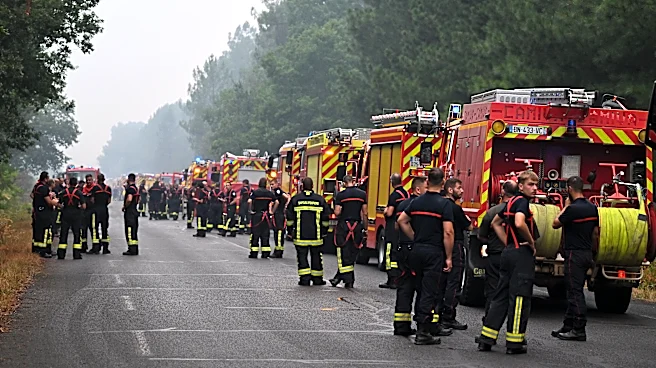
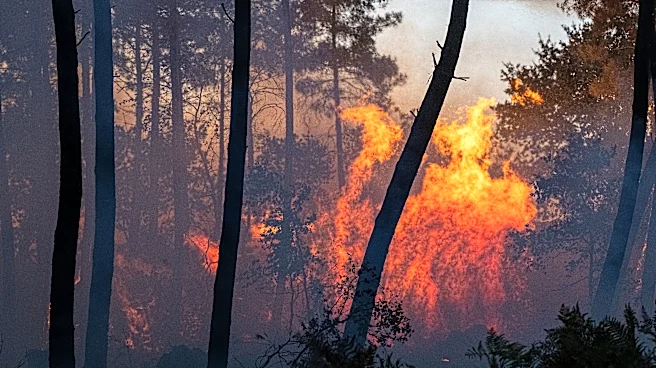
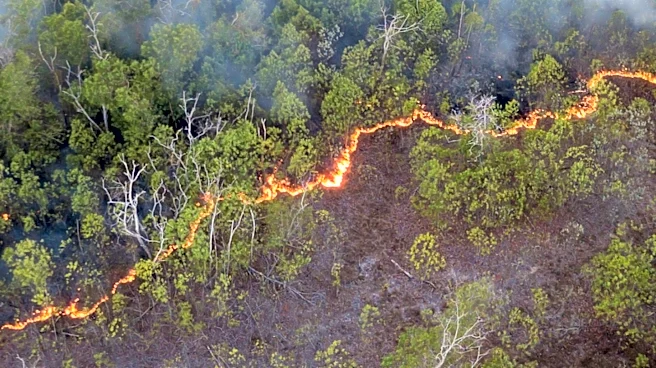
France and Spain are grappling with severe wildfires that have forced the evacuation of over 250,000 people. In France, military cargo planes have been deployed to drop flame retardants, and the final stage of the Tour de France has been shortened to redirect
security personnel to firefighting efforts. The fires have been exacerbated by successive heat waves, which have turned forests into tinderboxes. In Spain, the fires have already consumed 130,000 hectares of forest, surpassing the annual average. The Spanish Prime Minister, Pedro Sánchez, noted that favorable weather conditions might help control the blazes. The fires have also led to the first reported fatality in the region of Valencia.
Why It's Important?
The wildfires in France and Spain highlight the increasing frequency and intensity of natural disasters linked to climate change. These events have significant implications for public safety, economic stability, and environmental health. The displacement of hundreds of thousands of people underscores the urgent need for effective disaster management and climate adaptation strategies. The fires also pose a threat to critical infrastructure and local economies, particularly in regions dependent on tourism and agriculture. The international response, including assistance from other European nations, reflects the need for collaborative efforts in addressing such large-scale environmental crises.
What's Next?
Efforts to control the wildfires will continue, with additional resources being mobilized, including military personnel and firefighting equipment. Authorities are likely to focus on preventing the spread of fires to densely populated areas and critical infrastructure. The situation may prompt discussions on enhancing regional cooperation and developing more robust climate resilience strategies. In the longer term, these events could influence policy decisions related to climate change mitigation and adaptation, as well as emergency preparedness and response frameworks.
Beyond the Headlines
The wildfires serve as a stark reminder of the broader impacts of climate change, including the increased risk of extreme weather events. They also raise questions about land management practices and the need for sustainable development policies that prioritize environmental conservation. The psychological and social impacts on displaced communities are significant, highlighting the importance of providing adequate support and resources for recovery and rebuilding efforts. Additionally, the fires may influence public opinion and political discourse on climate action, potentially accelerating policy changes at both national and international levels.